How To Store Yoga Mats The Right Way
by Susan T.
Ever wondered why your yoga mat smells funky or starts peeling after just a few months? The answer usually has nothing to do with the mat itself — it's how you store it. Learning how to store yoga mats properly is the single easiest thing you can do to extend their lifespan, keep them hygienic, and save yourself money in the long run. Whether you own one mat or a growing collection, the storage method you choose affects everything from grip quality to odor control. If you've been tossing your mat in a corner or leaving it rolled up in your car trunk, this guide will change your routine. You'll also want to make sure you're practicing on the right yoga mat for your needs before dialing in your storage setup.

The good news is that proper yoga mat storage doesn't require expensive gear or a dedicated room. A few smart habits and the right approach for your space can make all the difference. Below, you'll find everything from busting common myths to a full cost breakdown of storage solutions — so you can pick what actually works for your life.
And if you're still figuring out the right size for your practice, check out our guide on what size yoga mat you need before investing in storage.
Contents
- Yoga Mat Storage Myths You Need to Stop Believing
- How to Store Yoga Mats for Maximum Lifespan
- When to Roll, Hang, or Lay Flat Your Mat
- Storage Tips for Beginners vs. Seasoned Yogis
- Yoga Mat Storage Solutions by Budget
- Five-Minute Storage Upgrades You Can Do Today
- Protecting Your Mat for Years to Come
- Frequently Asked Questions
- Key Takeaways
Yoga Mat Storage Myths You Need to Stop Believing
There's a lot of bad advice floating around about how to store yoga mats. Let's clear the air on what actually matters and what's just noise.
Myth: Rolling Your Mat Tight Keeps It in Better Shape
This is one of the most common misconceptions. Rolling your mat extremely tight actually compresses the cushioning material and can cause permanent curl at the edges. A loose roll with the top side facing out is far better for maintaining the mat's structure. When you roll it top-side out, the edges naturally flatten when you unroll it for your next session.
Myth: Any Bag or Container Works Fine
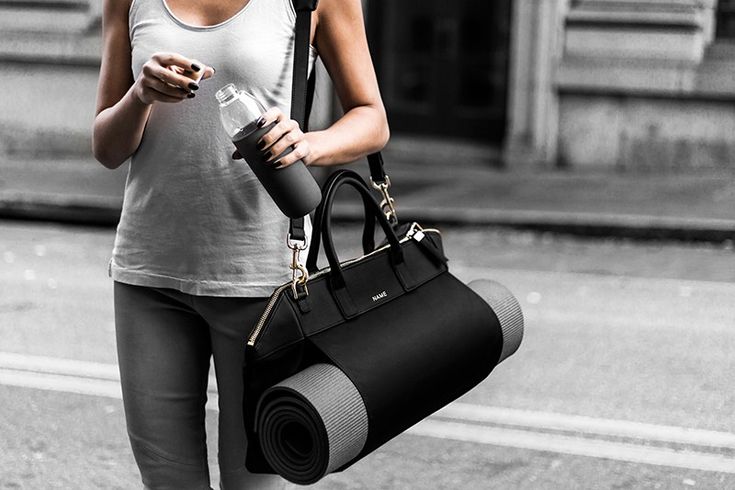
Sealed plastic bags and airtight containers trap moisture. That moisture breeds bacteria and mold, which is exactly how you end up with a mat that smells like a gym locker. Your mat needs airflow. Mesh bags, open-weave carriers, or simply a well-ventilated shelf are all better choices.
Myth: Sunlight Helps Kill Bacteria on Your Mat
While brief UV exposure can reduce surface bacteria, prolonged direct sunlight breaks down PVC, TPE, and natural rubber. According to the Wikipedia article on ultraviolet radiation, UV rays accelerate the degradation of polymer materials. A few minutes of sun after cleaning is fine. Leaving your mat on a sunny windowsill all day is not.
Pro tip: If you want to air out your mat, hang it in a shaded spot with good airflow for 15–30 minutes. You get the freshness without the UV damage.
How to Store Yoga Mats for Maximum Lifespan
Now that you know what not to do, here's what actually works. These best practices apply to every mat material — PVC, TPE, natural rubber, cork, or jute.
Rolling vs. Laying Flat
For most people, a loose roll is the most practical storage method. Roll with the practice surface (the side you stand on) facing outward. This counteracts the natural curl and helps the mat lay flat when you unroll it. If you have the space, laying your mat completely flat under a bed or on a shelf is the gold standard — zero compression, zero curling.
Always Clean Before Storing
Never roll up a sweaty mat and toss it in a closet. Wipe it down with a damp cloth or a gentle yoga mat cleaner after every session. For a deeper dive into cleaning methods, our guide on how to clean a Lululemon yoga mat covers techniques that work for most premium mats. Let it air dry completely before rolling — even ten minutes of drying time makes a huge difference.

Temperature and Humidity Matter
Store your mat in a cool, dry place away from direct heat sources. Radiators, space heaters, and car trunks on hot days are all mat killers. Ideal storage temperature is between 60–75°F (15–24°C) with humidity below 60%. High humidity invites mold growth, and extreme heat softens and warps the material permanently.
When to Roll, Hang, or Lay Flat Your Mat
The best storage method depends on how often you practice and how much space you have. Here's a straightforward breakdown.
Daily Practitioners
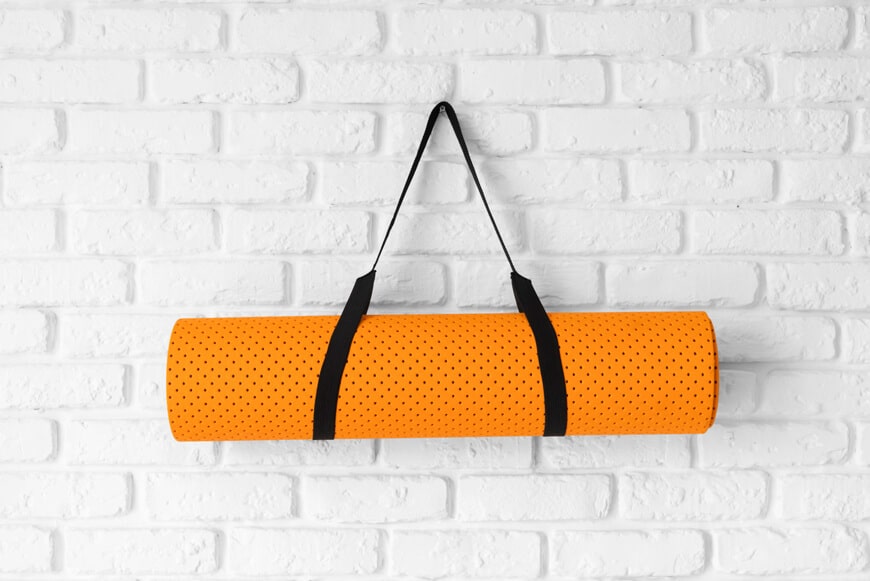
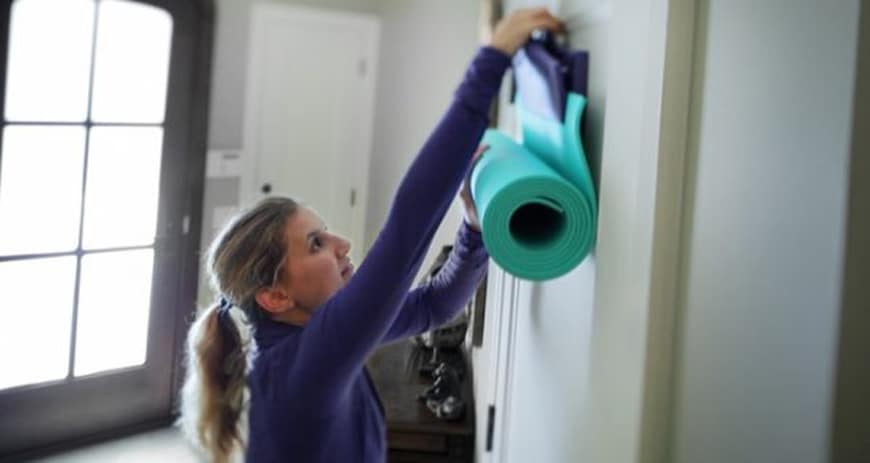
If you practice every day, hanging your mat is the best option. A simple wall hook or a dedicated mat hanger keeps it aired out and ready to grab. You skip the whole roll-unroll routine, and the mat stays flat without any edge curl.
Occasional or Weekly Use
A loose roll secured with a velcro strap or yoga mat band works perfectly. Store it vertically in a corner or on a shelf. Vertical storage saves floor space and prevents the mat from getting squished under other items.
Long-Term or Seasonal Storage
If you're putting a mat away for a month or more, lay it flat if possible. Roll it loosely if flat storage isn't an option. Avoid tight straps or bands for long-term storage — they create pressure points that dent the material. Wrap it in a breathable cotton cloth to keep dust off while still allowing airflow.
Warning: Never store a yoga mat in a garage, attic, or car trunk for extended periods. Temperature swings and humidity in these spaces will destroy the material faster than daily use ever could.
Storage Tips for Beginners vs. Seasoned Yogis
Your storage needs change as your practice evolves. Here's what to focus on at each stage.
If you're just starting out, you probably own one mat and practice a few times a week. Keep it simple. A velcro strap and a spot on a shelf or behind a door is all you need. Focus on the basics: clean it after use, let it dry, and store it loosely rolled in a ventilated area.
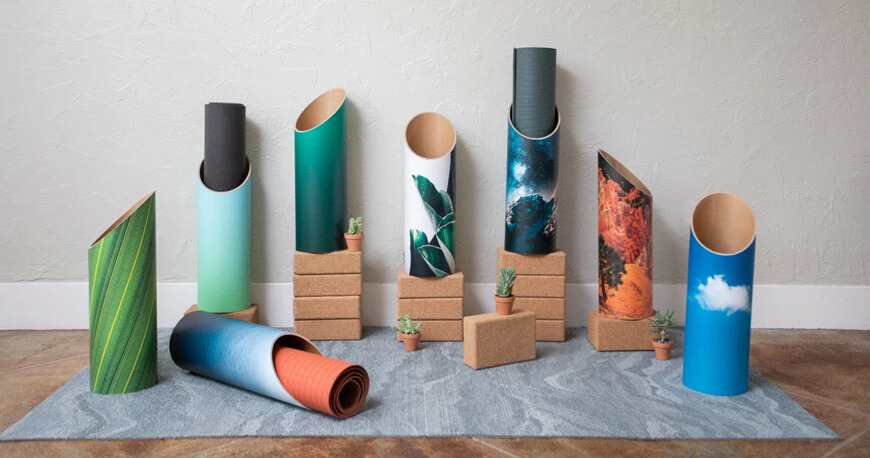
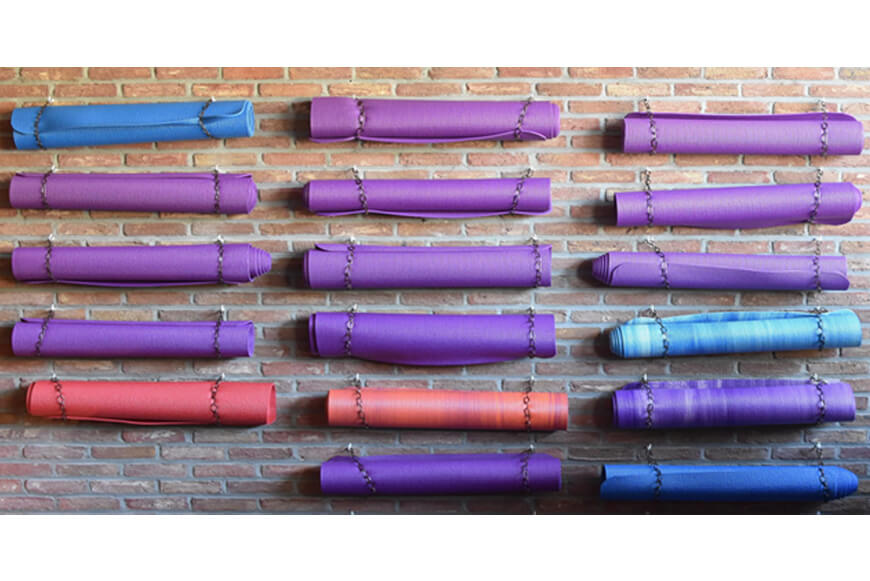
Seasoned yogis often own multiple mats for different purposes — a thick cushioned mat for restorative sessions, a thin travel mat, maybe a cork mat for hot yoga. At this stage, you need a dedicated storage system. A wall-mounted rack or a freestanding display rack keeps everything organized and accessible. You're also more likely to have props (blocks, straps, bolsters) that need a home alongside your mats.
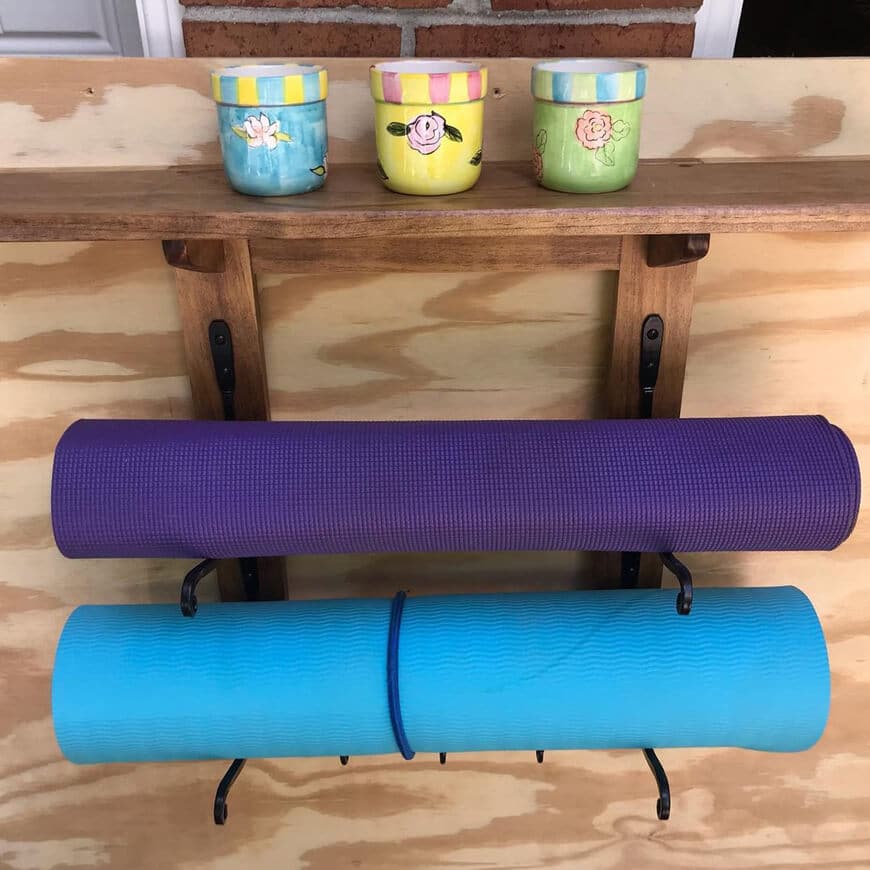
The key difference is capacity. Beginners need one good habit. Experienced practitioners need a system that scales with their gear collection.
Yoga Mat Storage Solutions by Budget
You don't need to spend a fortune to store your mat properly. Here's a comparison of popular storage options at every price point.
| Storage Solution | Price Range | Best For | Pros | Cons |
|---|---|---|---|---|
| Velcro strap / rubber band | $2–$5 | Budget-friendly, single mat | Cheap, portable, minimal space | No airflow when rolled |
| Wall hooks (adhesive or screw-in) | $5–$15 | Daily practitioners, small spaces | Keeps mat aired out, off the floor | Requires wall space |
| Mesh yoga mat bag | $10–$25 | On-the-go storage, commuters | Breathable, easy to carry | Not ideal for long-term storage |
| Woven basket or bin | $15–$30 | Home decor-friendly storage | Looks great, holds multiple mats | Takes up floor space |
| Wall-mounted mat rack | $25–$60 | Multi-mat owners, studios | Holds 3–6 mats, great airflow | Permanent installation |
| Freestanding display rack | $40–$100 | Home studios, large collections | Holds mats + props, portable | Pricey, needs floor space |
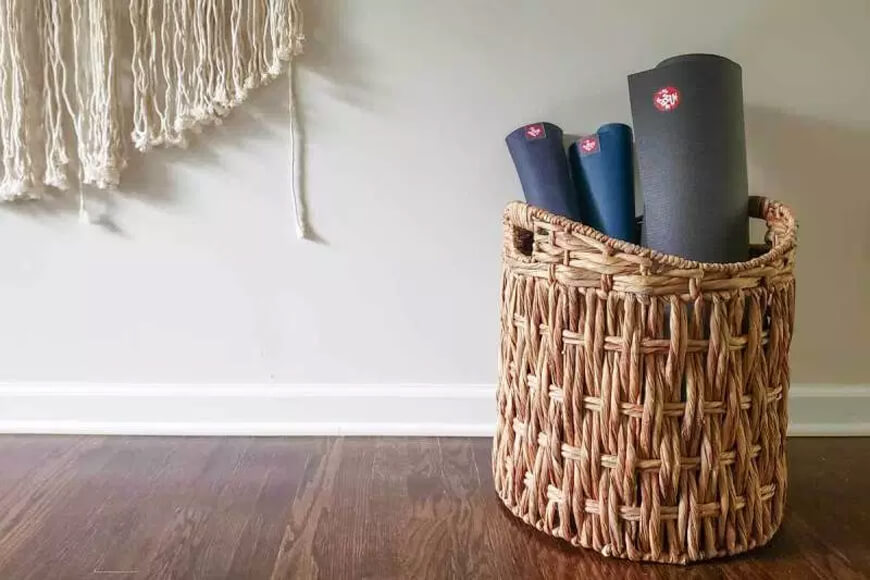
For most home practitioners, a $5–$15 wall hook setup gives you the best return on investment. It's cheap, it keeps the mat off the floor, and it allows full air circulation. If you're running a small home studio or have three or more mats, a wall-mounted rack is worth the upgrade.
Five-Minute Storage Upgrades You Can Do Today
You don't need to overhaul your entire setup. These quick fixes take no time at all and immediately improve how your mat holds up.
Switch your roll direction. If you've been rolling your mat with the practice surface on the inside, flip it. Roll with the top side out starting today. Your mat will lay flatter and the edges will stop curling up during your flow.
Move your mat away from heat. Check where your mat lives right now. Is it near a radiator, in a sunny windowsill, or in your car? Move it to a cool, shaded spot. This one change alone can add months to your mat's life.
Add a quick wipe-down to your post-practice routine. Keep a spray bottle with water and a drop of tea tree oil near your mat. A 30-second wipe after each session prevents buildup that leads to odor and degradation.
Stand your mat up instead of laying it on its side. When you store a rolled mat on its side, the bottom edge gets compressed against the floor. Storing it vertically distributes weight evenly and prevents flat spots.
Loosen your strap. If you use a velcro strap or band, loosen it one notch. You want the roll to hold together, not be squeezed. A looser hold preserves the mat's cushioning layer.
Protecting Your Mat for Years to Come
Good storage is part of a bigger picture. If you want your yoga mat to last three, five, or even ten years, you need a long-term care strategy that goes beyond where you put it after class.
Rotate Your Mats
If you own more than one mat, rotate them regularly. Using the same mat every single day wears it down faster than alternating between two. This is especially true for natural rubber mats, which compress more than synthetic options over time.
Know When to Replace
Even with perfect storage, every mat has a lifespan. When you start losing grip, when the cushioning feels thin, or when the surface starts flaking — it's time. Proper storage extends that timeline significantly, but it doesn't make a mat immortal. Most quality mats last two to five years with regular use and good care.
Seasonal Deep Cleaning
Once a month (or at minimum once per season), give your mat a full deep clean. Submerge it in a bathtub with warm water and mild soap, gently scrub both sides, rinse thoroughly, and hang it to dry completely before storing. This removes embedded sweat, oils, and bacteria that daily wipe-downs miss. Make sure the mat is bone dry before you roll it up — any trapped moisture will undo all your good storage habits.
Build Storage Into Your Practice Space
The best storage solution is one that fits naturally into your routine. If you practice at home, dedicate a corner or a wall section to your yoga gear. When your mat has a designated home, you're far more likely to store it properly every time instead of tossing it wherever is convenient.
Frequently Asked Questions
Is it better to roll or fold a yoga mat for storage?
Always roll, never fold. Folding creates hard creases that damage the material and leave permanent lines in the surface. A loose roll with the practice side facing out is the best method for preserving your mat's shape and grip quality.
Can I store my yoga mat in my car?
For a few hours between sessions, your car is fine. For regular overnight or multi-day storage, avoid it entirely. Car interiors reach extreme temperatures — up to 150°F (65°C) in summer — which warp, soften, and break down mat materials rapidly. The trunk is especially bad due to lack of ventilation.
How do I prevent my yoga mat from smelling bad in storage?
The smell comes from bacteria feeding on trapped sweat and moisture. Wipe your mat down after every session and make sure it's completely dry before rolling it up. Store it in a ventilated space — not in a sealed bag. For persistent odor, sprinkle baking soda on both sides, let it sit for 30 minutes, then wipe clean.
Should I use a yoga mat bag for storage at home?
A mesh or open-weave bag works well for keeping dust off while allowing airflow. Avoid closed, non-breathable bags for home storage since they trap moisture. If you're primarily storing at home and not transporting your mat, hanging it or storing it on a rack is better than any bag.
Key Takeaways
- Always roll your yoga mat loosely with the practice surface facing out, and make sure it's clean and fully dry before storing.
- Store your mat in a cool, dry, well-ventilated spot away from direct sunlight, heat sources, and sealed containers.
- Match your storage method to your practice frequency — hang for daily use, loose roll for weekly, and lay flat for long-term storage.
- A simple $5–$15 wall hook gives you the best value for proper mat storage, keeping it aired out and off the floor.


About Susan T.
Susan T. is an internationally recognized yoga teacher who has spent years leading teacher trainings, workshops, and retreats around the world. Her work has been featured in Yoga Journal, Mantra Yoga, and the San Jose Mercury News, and she brings the same accessible, grounded approach to her writing that she brings to the mat — focused on what yoga actually does for real bodies and real lives rather than what it looks like in a photoshoot. At the site, she covers yoga tips and technique guides, gear and accessory reviews, and resources for practitioners at every stage of their practice.