Does Yoga Build Muscle? What the Science Says
by Susan T.
Can your yoga practice actually pack on real muscle — or is it just a flexibility tool? If you've been wondering whether does yoga build muscle is a legitimate question or wishful thinking, the answer is more nuanced than most fitness influencers let on. The short version: yes, yoga builds muscle, but the type, speed, and extent depend entirely on how you practice. As a seasoned practitioner who has watched students transform their physiques on the mat, I can tell you the science backs up what we see in the studio every day. Whether you're exploring yoga tips for the first time or refining a years-long practice, understanding the muscle-building mechanics of yoga changes how you approach every single pose.
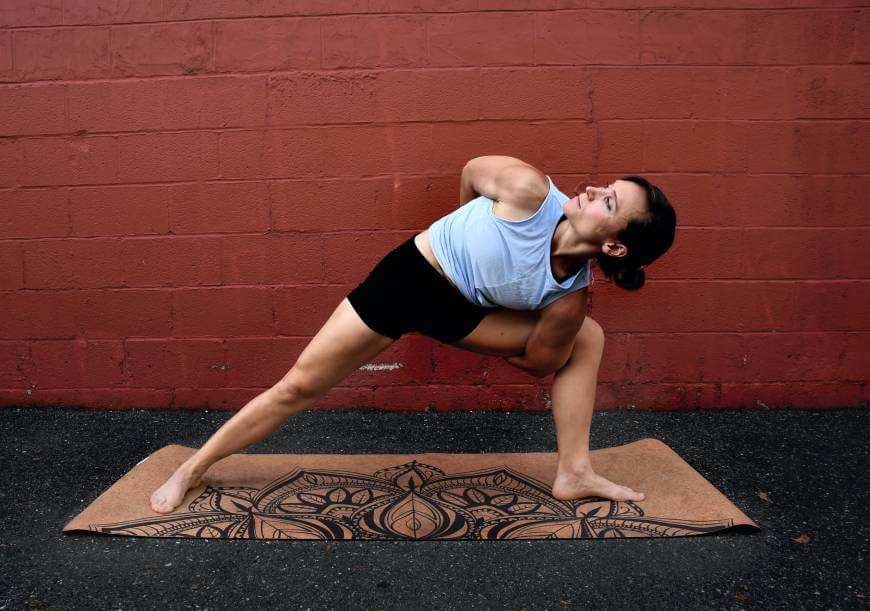
A study published in the Journal of Strength and Conditioning Research found that consistent yoga practice produces measurable gains in muscular strength and endurance — particularly in the upper body, core, and legs. The key mechanism is isometric contraction: holding your bodyweight against gravity for sustained periods creates the mechanical tension your muscles need to grow. It's not the same stimulus as a barbell squat, but it's far from nothing.
Below, you'll find exactly what the research says, which styles deliver the best results, how beginners and advanced practitioners should approach muscle-building differently, and the common mistakes that stall your progress.
Contents
The Science Behind Yoga and Muscle Growth
Your muscles don't care whether resistance comes from a dumbbell or your own bodyweight. What triggers muscle protein synthesis is mechanical tension, metabolic stress, and muscle damage — the three pillars of hypertrophy outlined in exercise science. Yoga delivers all three, just through different mechanisms than traditional resistance training.
Isometric vs. Isotonic Loading
Most gym exercises are isotonic — your muscles shorten and lengthen through a full range of motion. Yoga primarily uses isometric contractions, where your muscles fire without changing length. Think about holding Warrior II: your quads are working intensely, but your knee angle stays constant.
- Isometric holds recruit a high percentage of muscle fibers, especially when held to near-fatigue
- Eccentric loading occurs during slow transitions between poses (lowering from Plank to Chaturanga, for example)
- Time under tension in a typical vinyasa flow often exceeds what you'd get in a standard weight-training set
The practical implication: if you're holding poses long enough, you're generating a legitimate hypertrophy stimulus. Five-breath holds are a starting point; building toward 10–15 breaths per pose significantly increases the muscle-building effect.
Pro tip: If a pose feels easy before 8 breaths, you need a harder variation. Muscle growth requires working near your capacity — comfort is the enemy of progress.
What Research Says About Hypertrophy
A systematic review on bodyweight exercise found that untrained individuals see significant muscle gains from bodyweight-only protocols when exercises are performed to near-failure. For trained individuals, the gains plateau unless progressive overload is applied — which is exactly where yoga style selection becomes critical.

The takeaway is clear: does yoga build muscle for beginners? Absolutely. For advanced practitioners, it still builds muscle — but you need to be strategic about pose selection, hold duration, and progressive difficulty.
Best Yoga Styles for Building Muscle
Not all yoga is created equal when it comes to muscle development. A restorative class and a power vinyasa session produce vastly different physiological responses. Here's where your style choice directly impacts your results.
Power Yoga and Ashtanga
Power yoga and Ashtanga are the heavy hitters for muscle building. Both incorporate repeated Chaturanga-to-Upward Dog sequences that hammer your chest, shoulders, and triceps. The standing series in Ashtanga — with its deep lunges, balances, and twists — targets every major muscle group in your lower body.
- Ashtanga Primary Series: 60–90 minutes of continuous movement with 5-breath holds. Excellent for building muscular endurance and moderate hypertrophy
- Power Vinyasa: Faster transitions, more creative sequencing, and often includes arm balances that demand serious upper-body strength
- Slow Flow Yoga: Longer holds with deliberate transitions — surprisingly effective for muscle building because time under tension increases dramatically
If you're specifically training for muscle, avoid spending most of your mat time in Yin or restorative classes. Those serve recovery beautifully, but they won't provide the mechanical tension needed for growth.
How Long You Hold Matters
The relationship between hold duration and muscle activation follows a curve. Here's the general framework based on exercise physiology principles:
| Hold Duration | Primary Stimulus | Muscle-Building Potential | Best For |
|---|---|---|---|
| 1–3 breaths | Neuromuscular coordination | Low | Flow transitions, warm-up |
| 5–8 breaths | Muscular endurance | Moderate | Standard practice, beginners |
| 8–15 breaths | Hypertrophy + endurance | High | Muscle-building focus |
| 15–30 breaths | Isometric strength | Moderate-High | Advanced practitioners |
| 30+ breaths | Connective tissue + flexibility | Low | Yin, recovery |
The sweet spot for muscle growth sits in that 8–15 breath range. That's roughly 30–60 seconds of sustained contraction — which aligns perfectly with the time-under-tension recommendations from resistance training research.
Beginner vs. Advanced Muscle-Building Strategies
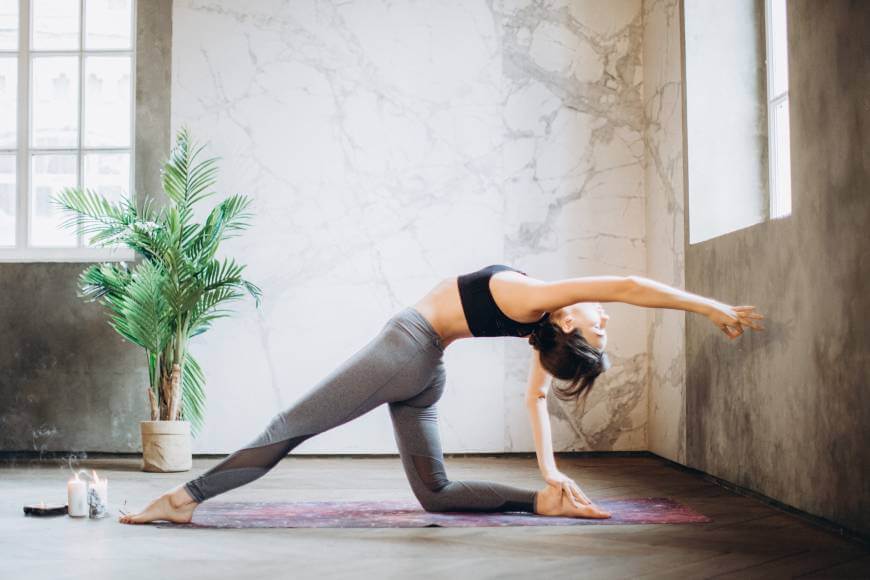
Your training age — how long you've been practicing consistently — determines which approach will deliver the best muscle-building results. A brand-new practitioner and someone with five years on the mat need fundamentally different strategies.
If You're New to Yoga
Good news: you're in the best position to build muscle from yoga alone. Your muscles haven't adapted to bodyweight loading yet, so even basic poses create a strong growth stimulus. Focus on these priorities:
- Practice 3–4 times per week with at least one rest day between sessions — if you're unsure about frequency, check our guide on how often you should do yoga
- Master foundational holds: Plank, Chaturanga, Warrior I/II/III, Chair Pose, and Boat Pose
- Hold each pose for 5 breaths minimum and build toward 8
- Don't skip Chaturanga — it's the single best upper-body builder in yoga
- Invest in a proper mat with adequate cushioning; an exercise mat won't cut it for yoga when you're holding demanding poses
Warning: Beginners who jump straight into advanced arm balances risk shoulder injuries that sideline progress for months. Build your foundation first — the fancy poses come later.
If You've Been Practicing for Years
Your body has adapted. Standard vinyasa classes no longer provide enough overload to stimulate new muscle growth. You need to introduce progressive difficulty:
- Add arm balances: Crow, Side Crow, Firefly, and Eight-Angle Pose demand significantly more upper-body strength
- Incorporate yoga wheel exercises to increase range of motion under load
- Extend hold times to 12–15 breaths in strength-focused poses
- Practice single-leg variations (Warrior III, Half Moon) to increase load on the working leg
- Consider adding a weekly power yoga or yoga-strength hybrid session
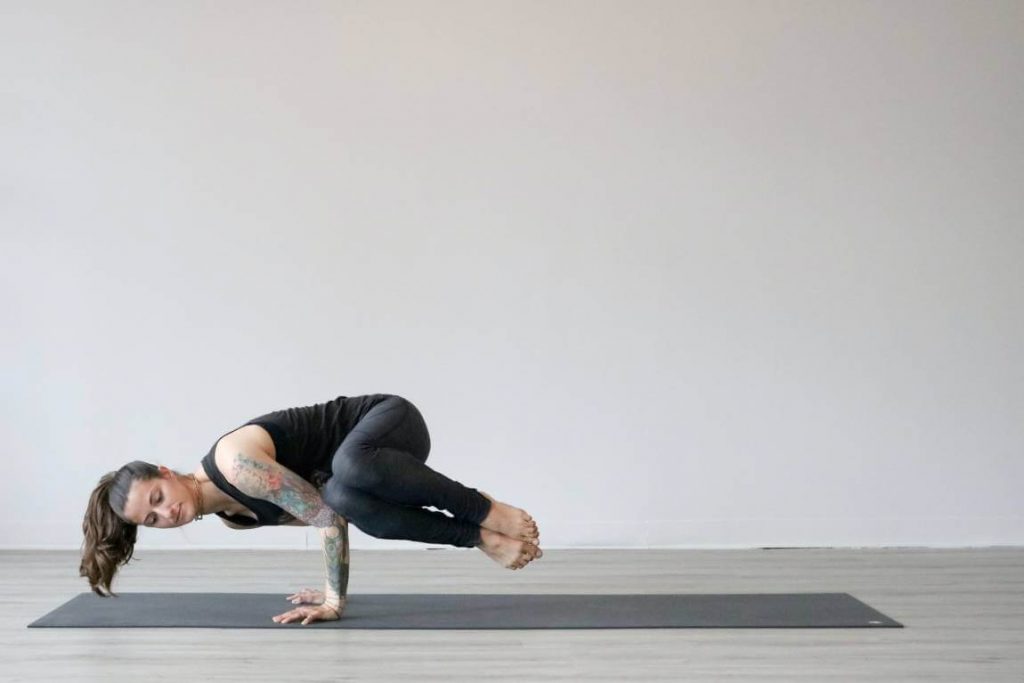
The honest truth for experienced practitioners: yoga alone has a ceiling for muscle mass. You'll build functional, lean muscle and impressive relative strength, but you won't develop bodybuilder-level size without external resistance. That said, the muscle you build through yoga is deeply functional — it serves you in every movement pattern of daily life.
Common Mistakes That Stall Your Gains
I've watched hundreds of students plateau because of the same handful of errors. If you feel like yoga stopped building muscle after the first few months, one of these is likely the culprit.
Form Breakdowns Under Fatigue
When your muscles fatigue, your body compensates by shifting load to joints, tendons, and less-targeted muscles. This is the opposite of what you want for muscle growth. Common compensations include:
- Dumping into the lower back during Plank instead of engaging your core
- Letting your front knee collapse inward during Warrior poses — this shifts work away from your glutes and quads
- Rushing through Chaturanga with elbows flared wide, which loads your shoulder joints instead of your chest and triceps
- Locking your knees in standing poses, which takes tension off the surrounding musculature
The fix: end the pose when your form breaks down. Three perfect reps build more muscle than ten sloppy ones. This applies to yoga holds too — a shorter hold with perfect alignment beats a longer hold with compensation.
Failing to Progress
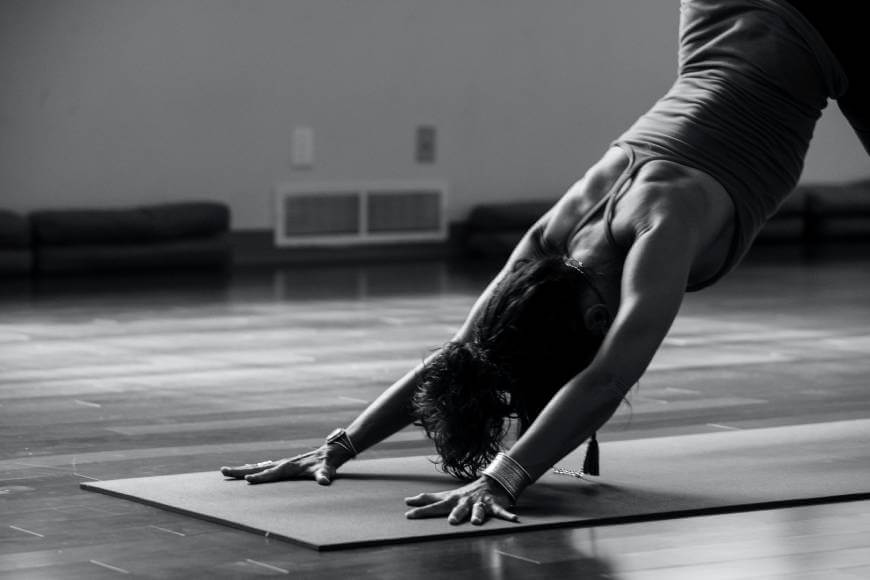
The most common plateau-causing mistake: doing the same class, same poses, same holds, week after week. Your muscles adapt, and adapted muscles don't grow. You need progressive overload, and in yoga that means:
- Increasing hold duration every 2–3 weeks
- Moving to harder pose variations (e.g., standard Plank → Side Plank → Side Plank with leg lift)
- Adding an extra flow-through in each sequence
- Reducing rest between poses to increase metabolic stress
- Trying partner or group yoga for resistance-based variations
Insider observation: Students who journal their practice — tracking hold times, variations, and perceived effort — progress roughly twice as fast as those who just show up and flow. Write it down.
Does Yoga Build Muscle as Effectively as Weight Training?
This is the question everyone really wants answered. Let's put them side by side with an honest comparison.
Side-by-Side Breakdown
- Maximum muscle mass: Weight training wins decisively. External loading allows you to overload muscles far beyond bodyweight limits
- Functional strength: Yoga holds its own. Multi-joint, multi-plane poses build coordination and stability that isolated gym exercises miss
- Muscle endurance: Yoga is arguably superior. Extended isometric holds and continuous flow build endurance that transfers to real-world activities
- Injury risk: Yoga is significantly lower-risk when practiced correctly — no heavy loads compressing your spine or straining your joints
- Flexibility gains: Yoga dominates. You build muscle through a full range of motion while simultaneously improving flexibility
The data consistently shows that yoga builds measurable muscle in untrained populations and maintains or modestly increases muscle in trained individuals. For pure hypertrophy, weight training is more efficient. But yoga delivers a package that weights alone cannot: strength, flexibility, balance, and body awareness in a single practice.

Combining Both for Maximum Results
The smartest approach isn't choosing one or the other — it's combining them. Here's a framework that works:
- 3 days of weight training focused on compound lifts (squat, deadlift, press, row)
- 2–3 days of yoga focused on power or slow flow styles
- Use yoga sessions for active recovery on lighter training days
- Prioritize comfortable, well-fitting gear so nothing restricts your range of motion during demanding poses
This combination gives you the hypertrophy benefits of external loading plus the flexibility, balance, and body awareness that yoga delivers. Your joints will thank you, and your muscles will respond to the varied stimulus.
Frequently Asked Questions
Does yoga build muscle as fast as weightlifting?
No. Yoga builds muscle at a slower rate than weightlifting because you're limited to your bodyweight for resistance. However, beginners often see noticeable muscle development within 4–8 weeks of consistent practice, especially in the shoulders, core, and legs. The muscle you build is lean and functional.
Which yoga poses build the most muscle?
Chaturanga Dandasana (low plank), Chair Pose, Warrior III, Boat Pose, Crow Pose, and Side Plank are among the most effective muscle builders. These poses load major muscle groups with significant bodyweight resistance and are staples in power and Ashtanga styles.
Can yoga replace the gym entirely?
For general fitness and moderate muscle development, yes — especially if you practice power or Ashtanga yoga 4–5 times per week. For maximizing muscle mass or training for strength sports, yoga alone falls short. It works best as a complement to weight training, not a full replacement.
How often should you practice yoga to build muscle?
Aim for 3–5 sessions per week with at least one rest day. Consistency matters more than session length. A focused 45-minute power yoga session builds more muscle than an occasional 90-minute gentle flow. Your muscles need both stimulus and recovery to grow.
Does yoga build upper body muscle?
Yes, particularly through Chaturanga, Plank variations, arm balances, and inversions. These poses load your chest, shoulders, triceps, and upper back with your full bodyweight. Students who practice vinyasa-style yoga regularly develop noticeable upper body definition within a few months.
Is yoga enough for someone who just wants to be toned?
Absolutely. If your goal is a toned, defined physique rather than maximum muscle mass, yoga is an excellent primary exercise. Combine it with adequate protein intake and you'll develop the lean, athletic look that many practitioners achieve. Styles like power vinyasa and Ashtanga deliver the best toning results.
Key Takeaways
- Yoga builds real muscle through isometric contractions and sustained time under tension, with beginners seeing the most dramatic gains in the first 4–8 weeks of consistent practice.
- Power yoga and Ashtanga styles deliver the strongest muscle-building stimulus — hold poses for 8–15 breaths in the hypertrophy sweet spot for maximum results.
- Progressive overload applies to yoga just as it does to weight training: increase hold times, advance to harder variations, and track your progress to avoid plateaus.
- For the best overall physique, combine yoga with weight training — you'll get the hypertrophy benefits of external loading plus the flexibility, balance, and functional strength that yoga uniquely delivers.


About Susan T.
Susan T. is an internationally recognized yoga teacher who has spent years leading teacher trainings, workshops, and retreats around the world. Her work has been featured in Yoga Journal, Mantra Yoga, and the San Jose Mercury News, and she brings the same accessible, grounded approach to her writing that she brings to the mat — focused on what yoga actually does for real bodies and real lives rather than what it looks like in a photoshoot. At the site, she covers yoga tips and technique guides, gear and accessory reviews, and resources for practitioners at every stage of their practice.