25 BFF 2-Person Yoga Poses to Strengthen Your Friendship
by Susan T.
Last summer, my best friend and I unrolled our mats in her backyard, attempted a double plank, and immediately collapsed into a pile of laughter. That ten-minute experiment turned into a weekly ritual that transformed both our practice and our friendship. If you've been curious about 2 person yoga poses, you're about to discover why practicing with a partner unlocks benefits you simply cannot get on your own. Whether you're a seasoned yogi or someone who just finished their first yoga poses class, partner yoga meets you where you are.

Partner yoga isn't just a social media trend. Research from the history of yoga shows that collaborative physical practices have existed for centuries, rooted in the idea that shared movement builds trust and emotional connection. When you practice 2 person yoga poses with your best friend, you're tapping into something ancient and deeply human.
This guide walks you through 25 BFF-approved poses organized by difficulty, debunks the myths holding you back, and gives you a realistic plan for building a partner yoga habit that actually sticks. Grab your friend and let's get into it.
Contents
Common Myths About Partner Yoga — Busted
Before you even step on the mat, you've probably heard at least one of these myths that keeps people from trying 2 person yoga poses. Let's clear the air.
"You both need to be the same size." Completely false. Many partner poses actually work better when there's a height or weight difference because it creates natural leverage. The taller person often serves as the base while the smaller person acts as the flyer, and both roles build serious strength.
"You need to be flexible first." This one keeps so many people stuck. Partner yoga is one of the best ways to build flexibility because your partner provides gentle assistance in stretches you'd struggle to hold alone. If you're wondering how long it takes to get flexible, working with a partner can genuinely accelerate the timeline.
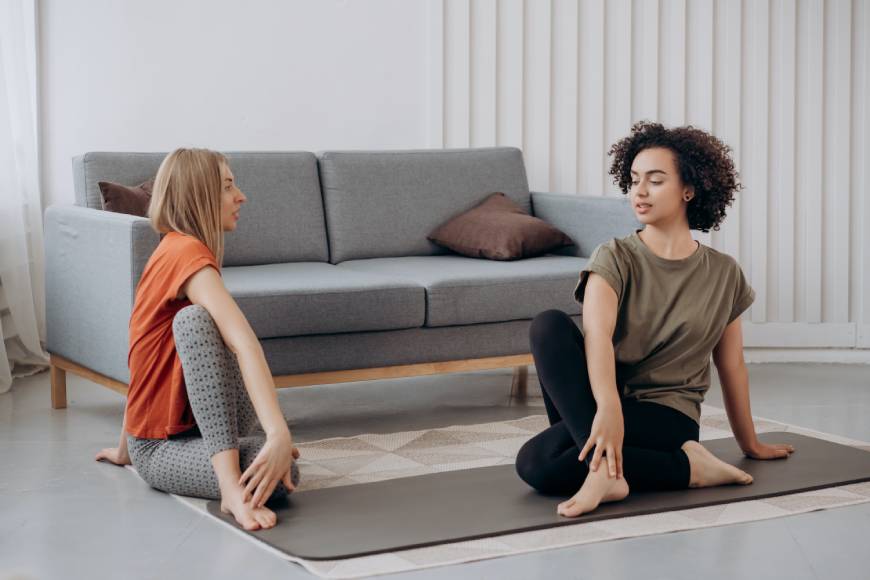
"It's only for couples." Partner yoga was built for any two people who trust each other. Friends, siblings, parent-child duos — the relationship doesn't matter. What matters is communication and willingness to support each other. And honestly, practicing with a best friend removes the romantic pressure and lets you focus purely on the movement.
What You Actually Need to Get Started
One of the best things about 2 person yoga poses is how little gear you need. You don't need a studio membership or fancy equipment. Here's what the investment actually looks like.
Gear and Cost Breakdown
| Item | Needed? | Estimated Cost | Notes |
|---|---|---|---|
| Yoga mats (2) | Essential | $20–$80 each | Place side by side or use one oversized mat |
| Comfortable clothing | Essential | $0–$60 | Stretchy, non-restrictive; avoid zippers and buckles |
| Yoga blocks (2) | Helpful | $10–$15 each | Great for modified poses and balance support |
| Yoga strap | Optional | $8–$12 | Bridges the gap if you can't reach each other's hands |
| Meditation cushion | Optional | $25–$50 | For seated partner poses and cool-down |
Your total startup cost can be as low as $40 if you already own workout clothes. If you're shopping for a meditation cushion for back support, that's a worthwhile add-on for seated partner poses. For clothing, you want something that stays put — consider checking whether yoga pants or leggings work better for your body and the poses you're attempting.
How 2 Person Yoga Poses Actually Work
Every partner pose involves a relationship between two roles, shared breathing, and constant verbal communication. Understanding these fundamentals prevents injury and makes the practice feel intuitive rather than chaotic.
Understanding Base and Flyer Roles
In most 2 person yoga poses, one person acts as the base — the grounded partner who provides stability and support. The other is the flyer — the partner who lifts, balances, or extends using the base's body as a platform. These roles aren't fixed. You should switch throughout your session so both partners develop strength and trust in each position.
Breathing together is non-negotiable. Before entering any pose, take three synchronized breaths. Inhale together, exhale together. This simple act aligns your nervous systems and creates a shared rhythm. You'll notice that poses feel dramatically easier when your breathing is in sync. If you want to understand how often you should practice yoga, partner sessions twice a week is a solid starting frequency.
Pro tip: Establish a safe word before your session. If either partner says it, you both exit the pose immediately — no questions asked. This removes the pressure to push through discomfort.
Beginner-Friendly 2 Person Yoga Poses
Start here if either of you is new to partner work. These poses require minimal flexibility and build the communication habits you'll need for harder poses later.
Seated and Grounded Poses
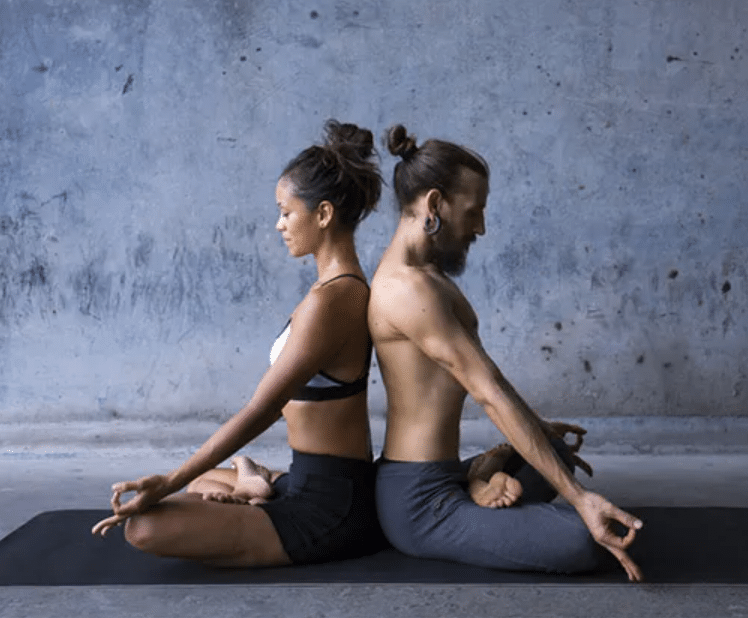
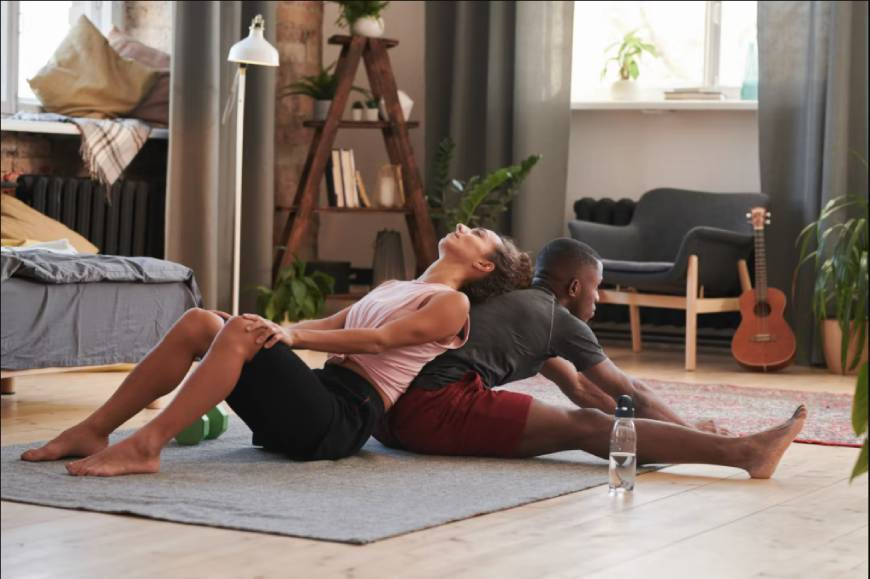
Back-to-Back Meditation (Sukhasana) is the perfect starting point. Sit cross-legged with your backs pressed together, spines aligned. Close your eyes and breathe. You'll feel your partner's ribcage expand and contract, which naturally slows your own breathing. Hold for two to five minutes.
Partner Bound Angle (Baddha Konasana) deepens your hip stretch with zero extra effort. Sit facing each other with the soles of your feet touching. Hold each other's forearms and gently alternate pulling — one partner folds forward while the other leans back. The passive stretch from your partner's weight goes far deeper than what you'd achieve solo.
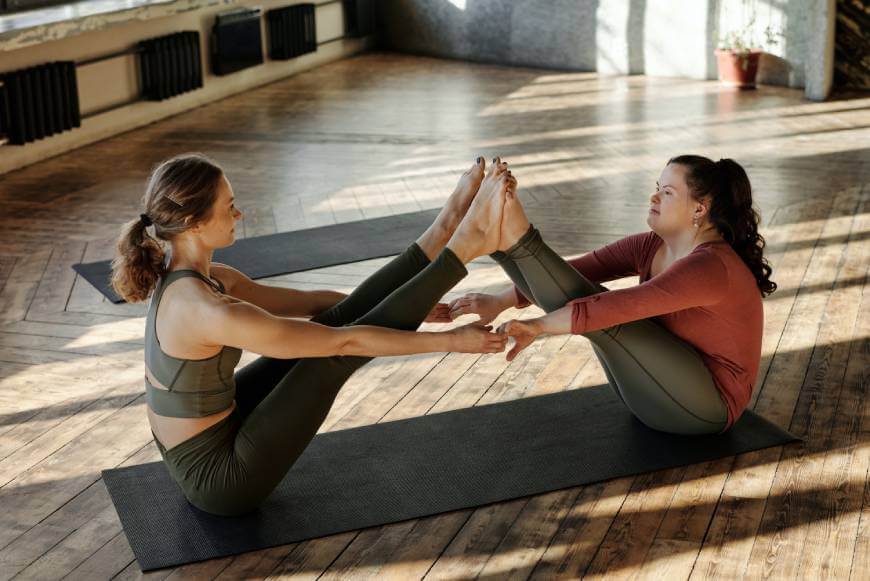
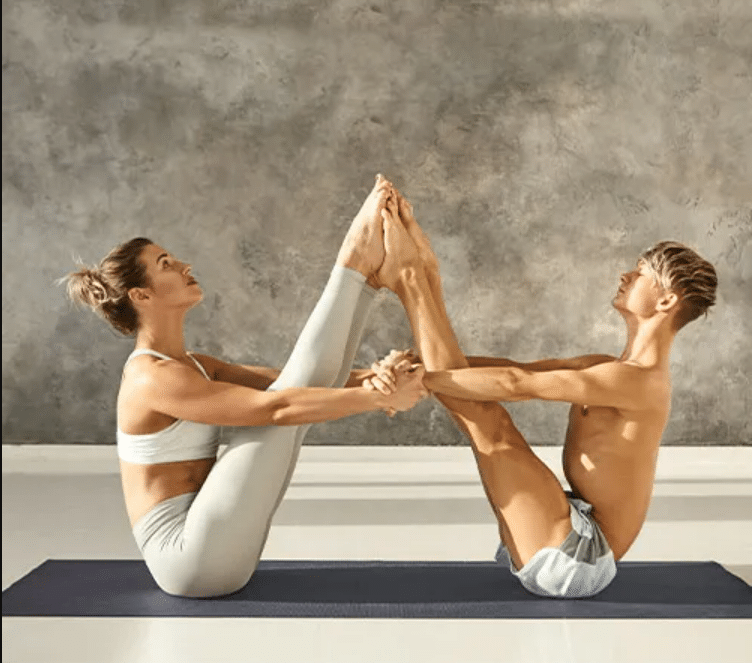
Supported Boat Pose (Navasana) builds core strength while testing your coordination. Sit facing each other, knees bent, and grab each other's wrists. Slowly lift your feet and press the soles together, straightening your legs into a V shape. Your grip on each other provides the stability that makes this pose accessible even if your solo boat pose is shaky.
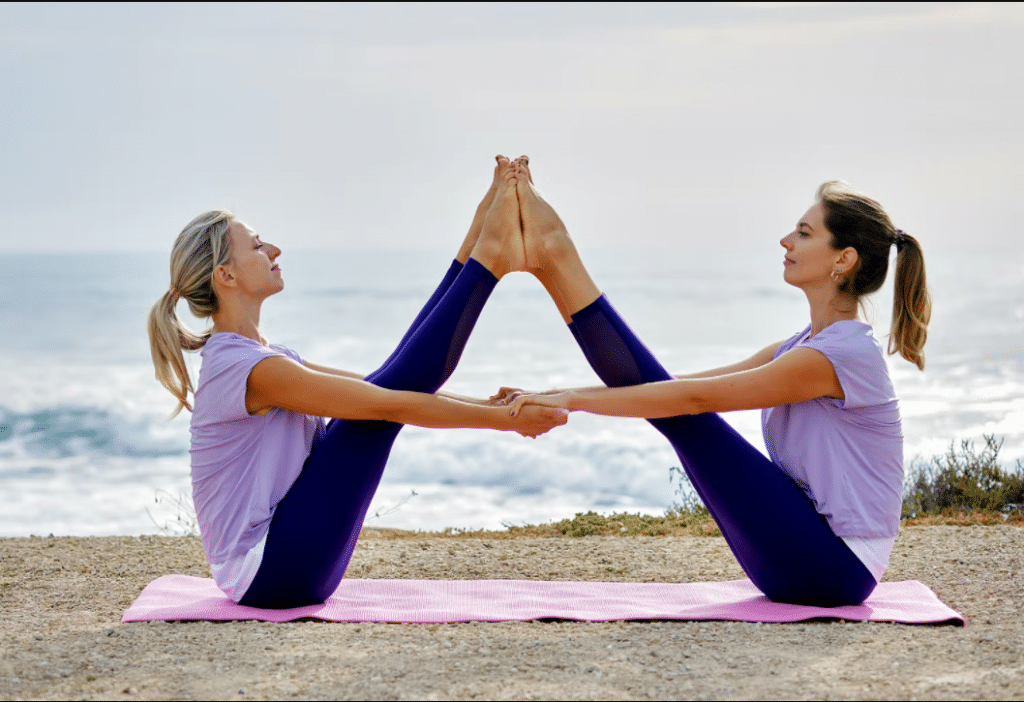
Stretch Gate Pose opens the side body beautifully. Sit side by side in a wide-legged position. Each partner reaches their outer arm overhead, bending toward each other until your inner hands meet. The combined weight creates a lateral stretch that's deeper than anything you'd manage alone.
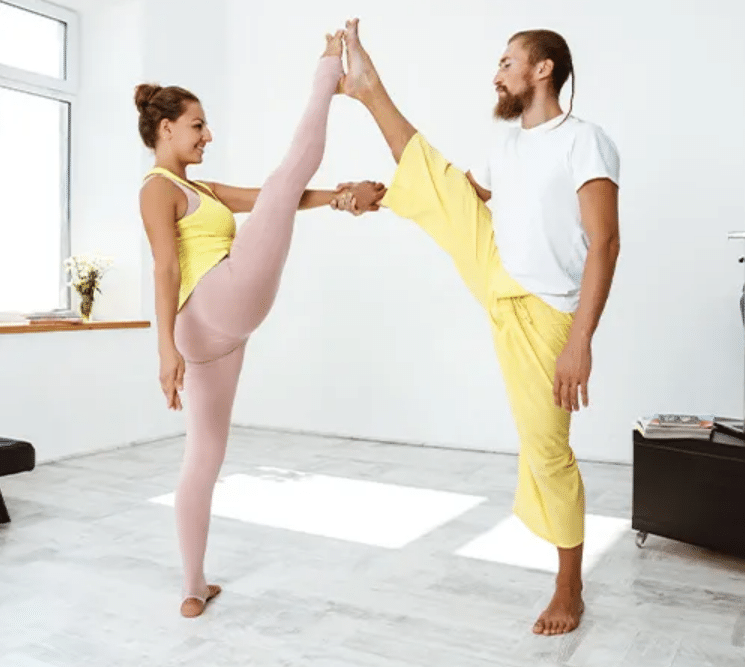
Standing Beginner Poses
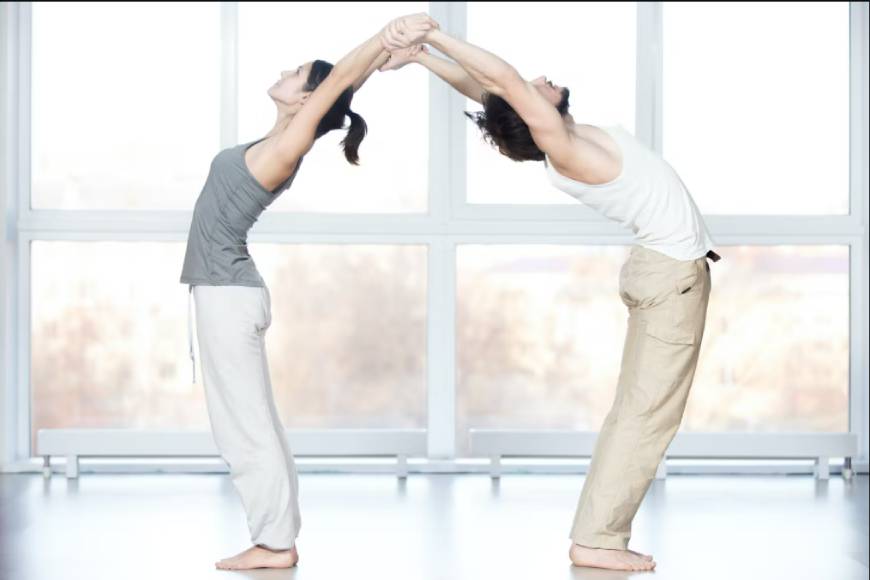
Double Standing Backbend is a gentle heart opener. Stand facing each other about arm's length apart. Hold each other's forearms and slowly lean back, letting your hips shift forward. Your partner's counterweight allows you to open your chest far more than a solo standing backbend. If you're wondering whether yoga builds muscle, this pose will convince your shoulders and upper back.
Dancing Partner Pose blends balance work with grace. Stand facing each other, each lifting your right leg behind you into a modified Dancer's Pose. Reach your free hand forward and press your palms together. Your partner becomes a living wall of support, turning an intermediate solo pose into something achievable for beginners.
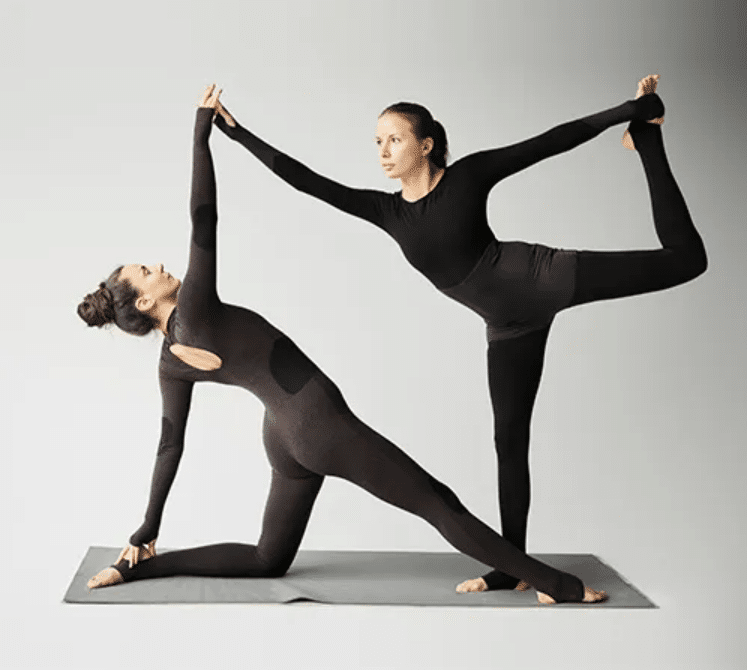
Advanced Poses That Push Your Limits
Once you've built trust and body awareness with the beginner poses, these advanced 2 person yoga poses will challenge your strength, balance, and communication at a whole new level. Don't rush into these — spend at least a few weeks on the fundamentals first.
Acro-Inspired Partner Poses
Peak Cobra Pose requires serious back strength and trust. One partner lies face down while the other stands straddling them, gently lifting their torso into an elevated cobra. The standing partner provides controlled lift while the lying partner engages their back muscles to hold the arch.
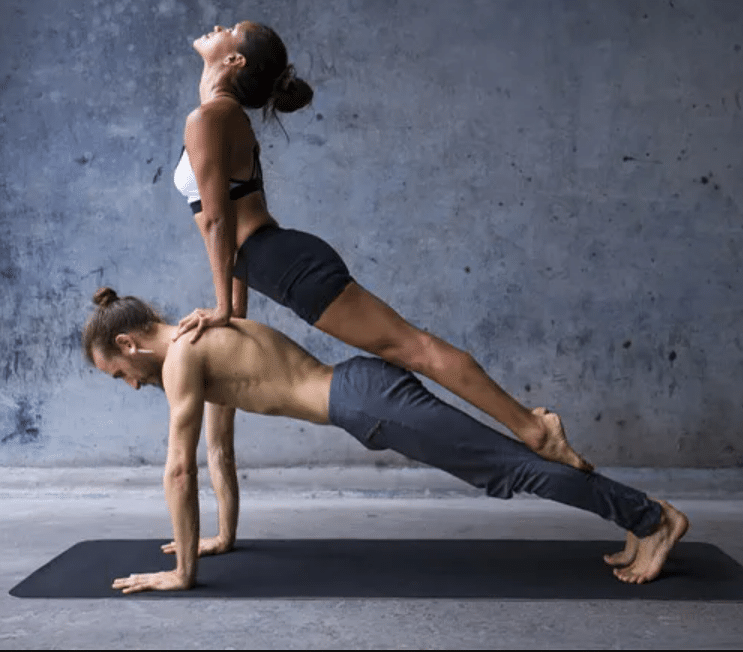
Human Horse Pose is exactly what it sounds like — one partner forms a tabletop position while the other drapes over their back in a supported backbend. This builds tremendous core stability for the base and spinal flexibility for the flyer. Communication is everything here — the base must tell the flyer exactly when to shift weight.
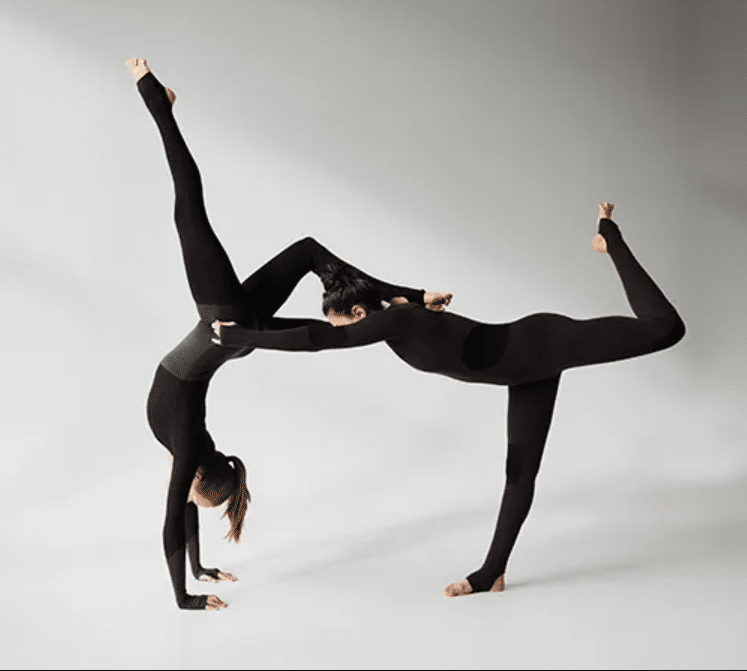
Inverted Plank Pose takes your standard reverse plank and adds a partner element. Both partners sit facing each other, feet touching. You simultaneously press up into reverse plank, feet stacked on each other's for balance. This pose fires up your hamstrings, glutes, and triceps in a way that makes you both feel like absolute warriors.
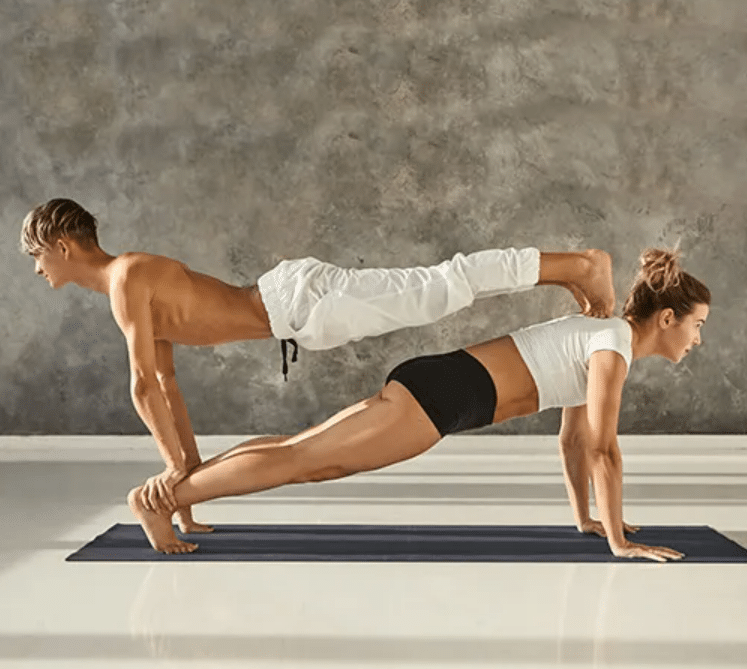
Sitting Bridge Pose involves one partner in bridge position while the other sits on their hips, using the elevation as a platform for seated twists or forward folds. The base gets a deep hip flexor and chest opening while the flyer gains an elevated meditation seat.
Falling Angel Pose is the showstopper. The base stands in a wide squat while the flyer places their hip on the base's thigh and extends into a supported side angle. It looks spectacular in photos and builds incredible lateral strength for both partners.
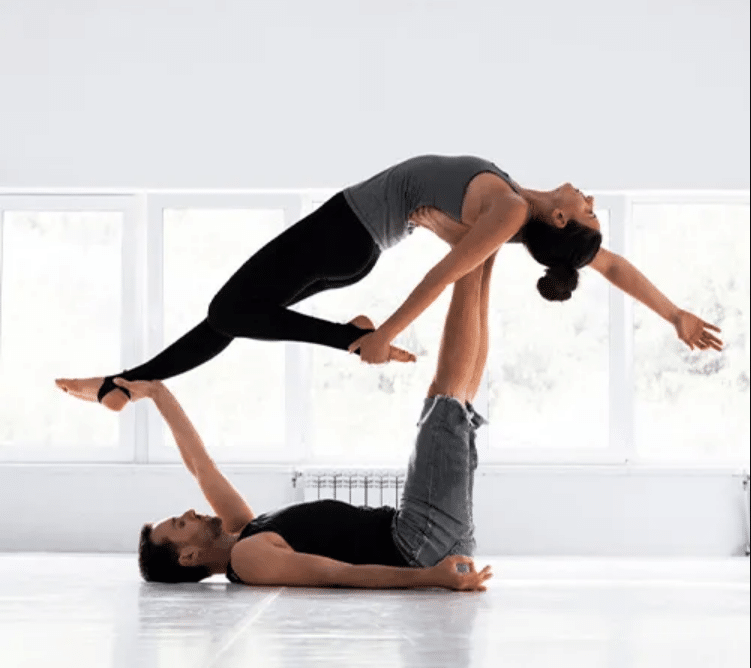
Warning: Never attempt an advanced partner pose without a proper warm-up. Spend at least 10 minutes on individual stretches and 2–3 beginner partner poses before progressing to anything that involves lifting or inversions.
Building a Long-Term Partner Yoga Practice
The biggest mistake people make with 2 person yoga poses is treating it as a one-off activity. You do it once for Instagram, post the photo, and never touch it again. A real partner yoga practice requires consistency and intentional progression.
Start with a weekly commitment. Pick one day and time that works for both of you and treat it like an appointment. Thirty minutes is plenty. You're not training for Cirque du Soleil — you're building a habit. After four weeks of consistent weekly sessions, increase to twice per week if your schedules allow.
Track your progress together. Keep a shared note on your phone listing which poses you've attempted, which ones felt solid, and which need more work. This creates accountability and gives you both a sense of momentum. Knowing how long to hold each yoga pose helps you set realistic targets for your sessions.
Rotate roles every session. If you were the base last week, be the flyer this week. This prevents strength imbalances and keeps both partners engaged. It also builds empathy — once you've experienced both sides of a pose, you understand exactly what your partner needs from you.
Best Practices for Every Session
After guiding hundreds of partner yoga sessions, these are the non-negotiable practices that separate a great session from a frustrating one.
Warm up individually first. Spend five to ten minutes on your own practice — sun salutations, cat-cow stretches, hip openers. Your body needs to be ready before you add the complexity of another person. Jumping straight into partner poses cold is a recipe for pulled muscles.
Communicate constantly. Say what you're feeling in real time. "I need you to shift left." "That's too deep." "I'm stable, you can lean more." Silence during partner yoga is dangerous — your partner cannot read your mind, and guessing leads to injury.
End with partner savasana. Lie side by side in corpse pose for at least three minutes. This shared stillness after physical effort creates a bonding effect that psychologists call "co-regulation" — your nervous systems literally sync up and calm down together. It's the most underrated part of the entire practice.
Dress for the practice, not for fashion. You need clothing that stays in place during inversions and doesn't create slippery contact points between you and your partner. Avoid satin or silk fabrics entirely. Cotton or moisture-wicking blends give you the grip you need.
Frequently Asked Questions
Can beginners do 2 person yoga poses?
Absolutely. Many partner poses are actually easier than their solo versions because your partner provides balance and support. Start with seated poses like back-to-back meditation and partner bound angle before progressing to standing or acro-inspired variations.
Do both partners need to be the same fitness level?
No. Different fitness levels can work to your advantage. The stronger partner naturally gravitates toward the base role, while the lighter or more flexible partner often excels as the flyer. You'll both improve faster by complementing each other's strengths.
How long should a partner yoga session last?
Aim for 30 to 45 minutes including warm-up and cool-down. Beginners should keep the actual partner pose work to about 15–20 minutes and spend the remaining time on individual stretching and shared savasana. Quality matters more than duration.
What if one partner is significantly heavier than the other?
Weight differences are manageable in most poses. The heavier partner typically takes the base role in acro-style poses, while seated and standing poses work regardless of weight. Focus on poses where both partners stay grounded until you build enough strength and technique for lifting poses.
Is partner yoga safe during pregnancy?
Some gentle seated poses like back-to-back meditation are generally safe during early pregnancy, but you should consult your healthcare provider before attempting any partner yoga. Avoid all poses involving pressure on the abdomen, inversions, or deep twists.
How do you prevent injuries during 2 person yoga poses?
Three rules: always warm up individually first, communicate throughout every pose, and never force a position. Exit any pose the moment either partner feels sharp pain or instability. Progress gradually — master each difficulty level before advancing.
Can you practice 2 person yoga poses without prior yoga experience?
You can, but having a basic understanding of fundamental poses like downward dog, plank, and warrior helps significantly. Consider taking a few solo classes or following beginner tutorials to build body awareness before your first partner session.
Next Steps
- Text your friend right now and pick a day this week for your first partner yoga session. Put it on the calendar. A plan without a date is just a wish.
- Start with three beginner poses from this guide — back-to-back meditation, partner bound angle, and supported boat. Master these before touching anything in the advanced section.
- Set up your space by clearing a room with at least 8 feet by 8 feet of open floor. Lay out two mats side by side, grab water bottles, and queue up a calm playlist. Preparation removes friction.
- Record your first session — not for social media, but for yourselves. Watching the playback reveals alignment issues you can't feel in the moment and gives you something to laugh about later.
- Commit to four consecutive weeks of weekly sessions before deciding whether partner yoga is for you. One session is a novelty; four sessions is enough to feel real progress and build genuine connection.


About Susan T.
Susan T. is an internationally recognized yoga teacher who has spent years leading teacher trainings, workshops, and retreats around the world. Her work has been featured in Yoga Journal, Mantra Yoga, and the San Jose Mercury News, and she brings the same accessible, grounded approach to her writing that she brings to the mat — focused on what yoga actually does for real bodies and real lives rather than what it looks like in a photoshoot. At the site, she covers yoga tips and technique guides, gear and accessory reviews, and resources for practitioners at every stage of their practice.