Slow Flow Yoga: Benefits, Basics, and Who It's For
by Susan T.
According to a Yoga Alliance survey, over 72% of yoga practitioners who quit within the first year cite classes that moved too fast as their primary reason for dropping out. If you've ever felt lost in a vinyasa class while everyone else seamlessly transitions from pose to pose, slow flow yoga for beginners offers a radically different experience. This deliberate, breath-centered practice strips away the rush and gives you space to actually learn what your body is doing. Whether you're brand new to yoga or returning after a long break, slow flow meets you exactly where you are — and our yoga tips library is packed with guidance to support your journey.
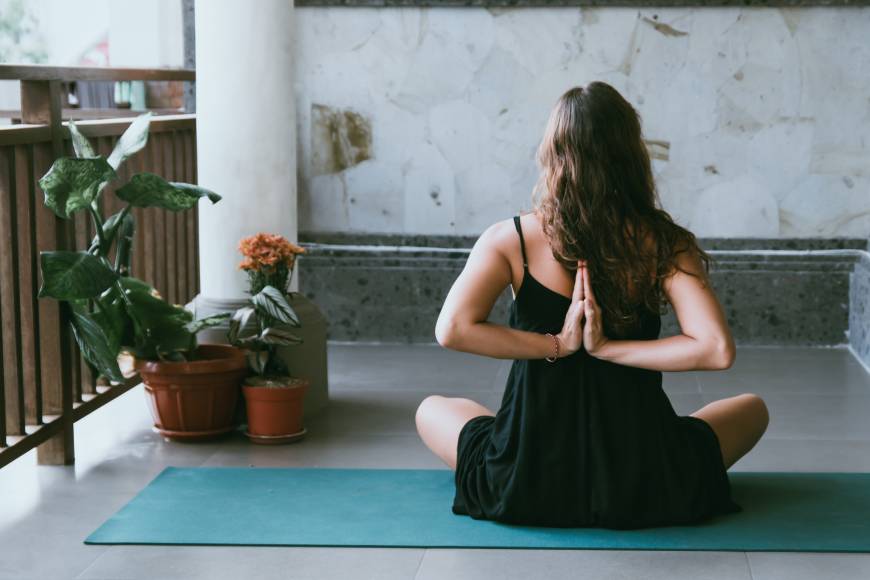
Slow flow yoga is a style of vinyasa where you hold each pose for several breaths instead of moving through them in rapid one-breath-per-movement sequences. The tempo drops, the cues get clearer, and your nervous system has time to downshift. You still link movement to breath — that's what separates it from restorative or yin — but the pace allows you to build proper alignment habits from day one.
Think of it this way: regular vinyasa is a conversation at a cocktail party. Slow flow is a one-on-one coffee chat. Same language, completely different depth. And that depth is where real transformation happens — in your flexibility, your strength, and your relationship with your own body.
Contents
Essential Gear for Your Slow Flow Practice
You don't need a studio full of equipment to start slow flow yoga for beginners. But the right gear removes friction and keeps you focused on the practice instead of wrestling with a slippery mat or straining without support.
Choosing the Right Mat
Your mat is the single most important investment. Since slow flow involves holding poses longer than standard vinyasa, you need a mat that balances cushioning with stability. Here's what to look for:
- Thickness: 5mm to 6mm is the sweet spot. Thinner mats let you feel the floor for balance poses; thicker ones protect your knees in low lunges. If you're unsure about sizing, check out our guide on what size yoga mat you need before buying.
- Material: Natural rubber or TPE provides grip even when you sweat. PVC is budget-friendly but gets slick.
- Texture: A slightly tacky surface keeps your hands and feet planted during long warrior holds.
Skip the ultra-thin travel mats for your primary practice. You'll be spending real time in poses like pigeon and low lunge where knee padding matters.
Props That Make a Difference
Props aren't a sign of weakness — they're precision tools. In slow flow, where you're holding poses for 3–5 breaths, a block under your hand in triangle pose means you can actually open your chest instead of crunching toward the floor.
- Yoga blocks (2): Cork or high-density foam. You'll use them more than you expect.
- Strap: Essential for hamstring stretches and bound poses when your flexibility isn't there yet.
- Bolster or thick blanket: Supports your hips in seated forward folds and makes savasana genuinely restorative.
Start with two blocks and a strap — those three props eliminate 90% of the "I can't reach" frustrations that drive beginners away from yoga entirely.
What a Slow Flow Class Actually Looks Like
If you've never attended a slow flow session, the pace might surprise you. There's movement, but it's intentional. Every transition gets its own breath cycle, and the teacher typically demonstrates modifications in real time rather than rattling off Sanskrit names and expecting you to keep up.
A Typical Session Breakdown
A standard slow flow class runs 45–60 minutes. Here's how the time typically distributes:
| Phase | Duration | What You're Doing | Intensity |
|---|---|---|---|
| Centering & breathwork | 5–7 min | Seated or supine breathing, setting intention | Low |
| Gentle warm-up | 8–10 min | Cat-cow, seated twists, gentle sun salutation variations | Low–Moderate |
| Standing flow | 15–20 min | Warrior I & II, triangle, extended side angle, tree pose | Moderate |
| Peak poses | 8–12 min | Deeper backbends, hip openers, or balance challenges | Moderate–High |
| Cool-down | 8–10 min | Seated forward folds, supine twists, pigeon | Low |
| Savasana | 5–7 min | Final relaxation, full stillness | None |
Notice the generous time in warm-up and cool-down. That's deliberate. Slow flow respects your connective tissue's need for gradual loading and unloading.
Foundational Poses You'll Encounter
You won't see headstands or arm balances in a beginner slow flow class. The poses are familiar but executed with far more precision than in a faster class:
- Downward-facing dog — held for 5 breaths, with active cues about hand placement and shoulder rotation
- Warrior II — emphasis on back foot grounding and hip opening rather than just "getting into the shape"
- Chair pose — typically held longer, with attention to weight distribution in the feet
- Low lunge — extended hold to access the hip flexor, with block support encouraged
- Supine twist — 8–10 breaths per side, allowing the spine to genuinely decompress
If you want deeper guidance on timing, our article on how long to hold a yoga pose breaks down the science behind hold durations for different practice styles.
Common Mistakes That Stall Your Progress
Slow flow looks easy from the outside. That simplicity is deceptive. The slower pace actually exposes habits that faster classes let you hide behind. Here are the mistakes that consistently hold beginners back.
Alignment Pitfalls
- Locking your joints: Hyperextending your elbows in plank or your knees in standing poses puts stress on ligaments instead of muscles. Maintain a micro-bend always.
- Dumping into the lower back: In backbends like cobra, the movement should originate from your thoracic spine, not by hinging at your lumbar. Engage your core before you lift.
- Ignoring foot placement: In warrior poses, your front knee should track over your ankle. A misaligned knee under repeated long holds leads to strain.
- Holding your breath: Ironically, the slower pace makes some people concentrate so hard they forget to breathe. If you're not breathing, you're not doing yoga — you're doing stretching with extra steps.
If a pose hurts, you're not "pushing through" — you're compensating. Back off, grab a prop, and find the version of the pose where you can breathe comfortably for the full hold.
Mindset Traps
The mental game matters as much as the physical one. These psychological patterns derail more slow flow beginners than tight hamstrings ever will:
- Comparing yourself to others: The person next to you touching their toes has different bone structure, not just more practice. Skeletal variation accounts for up to 40% of flexibility differences according to research from the anatomy of flexibility.
- Treating it as "easy yoga": Slow flow builds serious strength and body awareness. Dismissing it as beginner-only limits your engagement.
- Skipping savasana: Your nervous system needs that closing integration period. Rolling up your mat early is like leaving a therapy session mid-sentence.
The fix for all three is the same: commit to your own mat. Your practice is between you and your breath. Nothing else.
Who Should (and Shouldn't) Practice Slow Flow
Slow flow yoga for beginners is remarkably accessible, but it's not universally the best starting point for every body and every goal. Here's an honest breakdown.
Ideal Candidates
You'll thrive in slow flow if you match any of these profiles:
- Complete beginners who need time to learn poses without feeling rushed or overwhelmed by fast sequences
- People recovering from injuries who need controlled movement with time to assess how each pose feels
- High-stress professionals looking for an active practice that also downregulates the nervous system
- Athletes from other sports using yoga for mobility work — the long holds translate directly to functional range of motion
- Older adults who want the benefits of flowing movement without high-impact transitions
- Anyone returning to fitness after a sedentary period — slow flow rebuilds proprioception and basic movement patterns
When Another Style Fits Better
Be honest with yourself about these scenarios:
- You want cardio: Slow flow won't elevate your heart rate significantly. Power vinyasa or ashtanga are better choices if cardiovascular conditioning is your primary goal.
- You're hypermobile: If your joints naturally move past normal range, the long holds in slow flow can push you deeper than is safe without strong muscular engagement cues. You'd benefit from a strength-focused practice first.
- You need deep stillness: If stress relief is your only goal and you don't care about building strength, yin yoga or restorative yoga delivers more parasympathetic activation per minute.
- You get bored easily: Some people genuinely need pace to stay present. If you find your mind wandering constantly in slow flow after giving it a fair trial (at least 6 sessions), a moderate-paced vinyasa might serve you better.
There's no shame in trying a style and discovering it's not your fit. The best yoga practice is the one you'll actually show up for consistently.
Building a Sustainable Long-Term Practice
Starting slow flow is easy. The real challenge is building a practice that lasts months and years, not just weeks. Here's how to structure your approach so it sticks.
Progression Milestones
Track your development through these concrete markers rather than Instagram-worthy poses:
- Weeks 1–4: You learn the names and basic shapes of 15–20 fundamental poses. Your breath starts to sync naturally with movement.
- Months 2–3: You notice which side of your body is tighter. You start self-correcting alignment without teacher cues. Poses that required blocks now feel optional.
- Months 4–6: Your practice has a meditative quality. You can hold warrior II for 8 breaths without mental resistance. You begin exploring deeper variations.
- Month 6+: You develop an intuitive sense for what your body needs on a given day. Some sessions are vigorous, others are gentle — and you choose consciously, not reactively.
Scheduling for Consistency
Frequency matters more than session length. Three 20-minute home sessions per week build more lasting change than one 90-minute studio class every Saturday. Here's a realistic framework:
- Minimum effective dose: 2 sessions per week, 20–30 minutes each
- Optimal growth: 3–4 sessions per week, mixing guided classes with self-led practice
- Daily micro-practice: 5–10 minutes of sun salutations and a few standing poses every morning, regardless of whether you do a full session
Anchor your practice to an existing habit. "After my morning coffee, I roll out my mat" works better than "I'll practice yoga sometime today." The specificity removes decision fatigue.
Consistency beats intensity every time. Twenty minutes three times a week will transform your body faster than a single marathon session followed by a week of nothing.
Slow Flow for Beginners vs. Experienced Practitioners
One of the most misunderstood aspects of slow flow is that it's "just for beginners." Advanced practitioners use slow flow differently — but they use it deliberately, and for good reason.
Beginner Priorities
When you're new to slow flow yoga for beginners, your attention should be concentrated on a few fundamentals:
- Breath awareness: Learn to maintain ujjayi breath (that ocean-sound exhale) through every pose. This is your foundation for everything else.
- Alignment over depth: A shallow warrior I with perfect knee tracking and hip squaring builds better patterns than a deep lunge with a collapsed arch.
- Modification confidence: Using props, dropping knees in plank, taking child's pose when you need it — these aren't failures. They're intelligent practice.
- Body mapping: Learning where you're tight, where you're strong, where you compensate. This self-knowledge is more valuable than any single pose.
At the beginner stage, your nervous system is adapting to new movement patterns. Give it time. The adaptations happening in your fascia and connective tissue take 6–8 weeks to manifest — longer than muscular changes.
How Advanced Yogis Use Slow Flow
Experienced practitioners return to slow flow for purposes that beginners don't yet recognize:
- Refinement: When you can hold warrior II without effort, you start noticing subtle rotations, weight shifts, and engagement patterns. Slow flow becomes a microscope for technique.
- Active recovery: After intense ashtanga or power vinyasa blocks, slow flow maintains movement quality without taxing the system.
- Teaching preparation: Many yoga teachers use slow flow to rehearse cues and explore transitions from a student's perspective.
- Meditation bridge: For practitioners who struggle with seated meditation, slow flow provides moving meditation — the same mental benefits with a physical anchor.
The difference between a beginner and an advanced practitioner doing the same slow flow sequence isn't visible from the outside. It's happening internally — in the depth of awareness, the precision of muscular engagement, and the quality of the breath. That's what makes this style endlessly scalable.
Frequently Asked Questions
How is slow flow yoga different from regular vinyasa?
The core difference is tempo. In regular vinyasa, you typically move one breath per movement — inhale arms up, exhale fold forward. In slow flow, you hold each pose for 3–5 breaths before transitioning. The sequence structure is similar, but the pacing gives you time to refine alignment, deepen into poses, and maintain conscious breathing throughout. Both styles link movement to breath; slow flow simply gives you more space within that link.
Can slow flow yoga help with weight loss?
Slow flow contributes to weight management indirectly rather than through high calorie burn. A 60-minute session burns roughly 200–300 calories depending on your body weight and the specific sequence. Where slow flow shines is in reducing cortisol levels and improving sleep quality — both of which directly impact metabolism and appetite regulation. Pair it with 2–3 weekly cardio sessions for a comprehensive approach to body composition.
How often should a beginner practice slow flow yoga?
Start with two sessions per week, each lasting 20–30 minutes. This frequency gives your connective tissue time to adapt between sessions while building enough repetition for your nervous system to learn the movement patterns. After four weeks, you can increase to three or four sessions. Avoid jumping straight to daily practice — overloading too early leads to soreness that kills motivation before the habit forms.
Slow down to speed up — the poses you hold longest teach you the most about yourself.


About Susan T.
Susan T. is an internationally recognized yoga teacher who has spent years leading teacher trainings, workshops, and retreats around the world. Her work has been featured in Yoga Journal, Mantra Yoga, and the San Jose Mercury News, and she brings the same accessible, grounded approach to her writing that she brings to the mat — focused on what yoga actually does for real bodies and real lives rather than what it looks like in a photoshoot. At the site, she covers yoga tips and technique guides, gear and accessory reviews, and resources for practitioners at every stage of their practice.