Yoga Poses For Three People Doing Acroyoga (Easy, Intermediate, and Challenging Poses)
by Susan T.
Ever wondered what happens when you add a third person to your yoga practice? Yoga poses for three people take standard acroyoga to a whole new level. You get more creative formations, deeper trust-building, and a serious core workout that solo practice simply cannot match. Whether you're a beginner looking for easy trio shapes or an experienced yogi chasing advanced flights, this guide breaks down the best three-person acroyoga poses by difficulty so you can start practicing today.
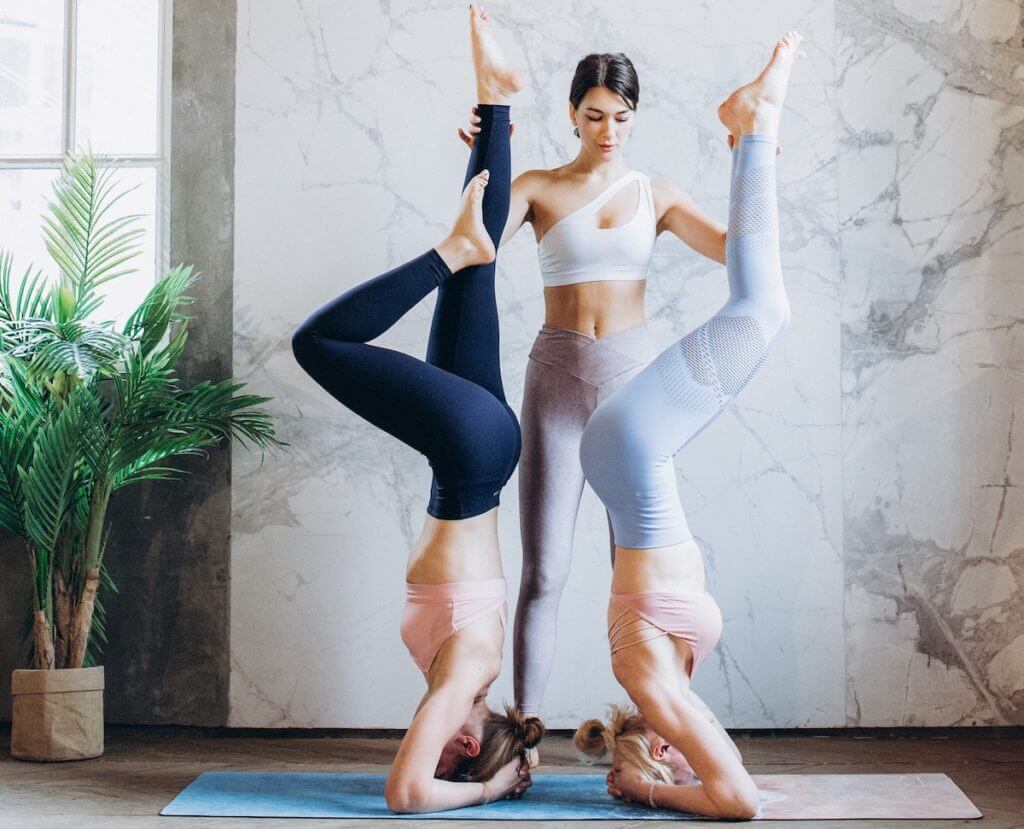
Three-person acroyoga combines strength, balance, and communication in ways that partner yoga alone does not. The third person introduces new variables — more weight distribution options, more complex stacking, and a built-in spotter for every pose. You don't need years of experience to begin, but you do need the right approach.
Contents
- Why Three-Person Acroyoga Builds Deeper Connections
- Easy Yoga Poses for Three People
- Intermediate Trio Poses Worth Mastering
- Challenging Poses That Push Your Trio
- Gear and Setup for Safe Three-Person Yoga
- Mistakes That Sabotage Your Trio Practice
- Three-Person Pose Difficulty at a Glance
- Frequently Asked Questions
- Next Steps
Why Three-Person Acroyoga Builds Deeper Connections
Standard acroyoga uses a base, a flyer, and sometimes a spotter. Three-person acroyoga makes all three participants active. Everyone bears weight, everyone balances, and everyone communicates constantly. This creates a level of trust and teamwork you won't find in solo or even four-person group poses.
The Three Roles in Every Trio
Your trio needs a base (the person on the ground supporting weight), a middle (the connector between base and top), and a flyer (the person on top). The strongest person typically takes the base position. The lightest person usually flies. The middle role demands the most flexibility because you're bridging two bodies.
According to the Acroyoga entry on Wikipedia, this practice blends yoga, acrobatics, and Thai massage. Three-person variations amplify the acrobatic element significantly.
Best Scenarios for Group Practice
Trio acroyoga works best outdoors on grass, in a spacious studio, or on padded flooring. You need at least a 10×10 foot clear area. Practice with people you trust — communication breakdowns cause injuries. If you're new to group yoga, spend a few sessions on building your flexibility first.
Pro tip: Always designate one person as the verbal cue leader. Three people adjusting independently creates chaos. One voice guides the transitions.
Easy Yoga Poses for Three People
Start here if your group has limited acroyoga experience. These poses keep everyone grounded and focus on synchronized movement rather than stacking.
Down Dog Pyramid
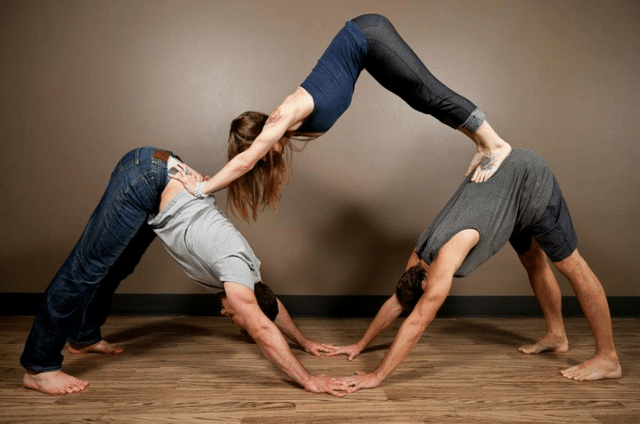
The base holds a standard downward dog. The second person places their hands in front of the base's hands and walks their feet onto the base's hips, forming their own downward dog on top. The third person repeats this on the second person. Your wrists bear the most strain, so warm them up thoroughly. This is the go-to starter pose for yoga poses for three people because it scales with your confidence.
3-Person Plank Pose
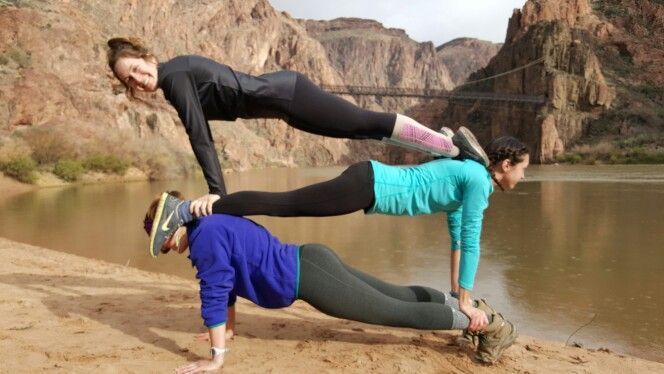
The base holds a plank. The second person places their hands on the base's ankles and holds a plank with feet on the floor. The third person stacks their hands on the second person's ankles. You build core endurance fast with this one. Hold for 15–30 seconds to start, and add time as your trio gets stronger.
Downward Dog L-Shape
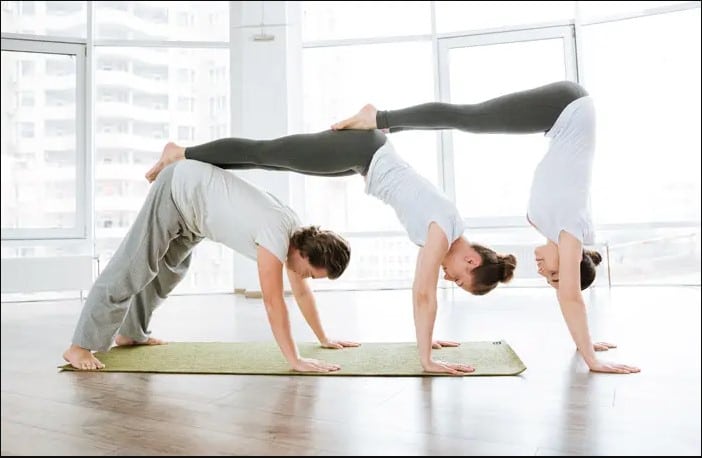
Two people hold downward dog facing each other. The third person places their feet on one base's hips and their hands on the other, forming an L-shape in the air. This introduces the feeling of being supported by two people without full flight. It's an excellent bridge between easy and intermediate difficulty.
Intermediate Trio Poses Worth Mastering
These yoga poses for three people require established trust, solid core strength, and clear communication. You should be comfortable with the easy poses for at least a few weeks before attempting these.
Whale Pose Variation
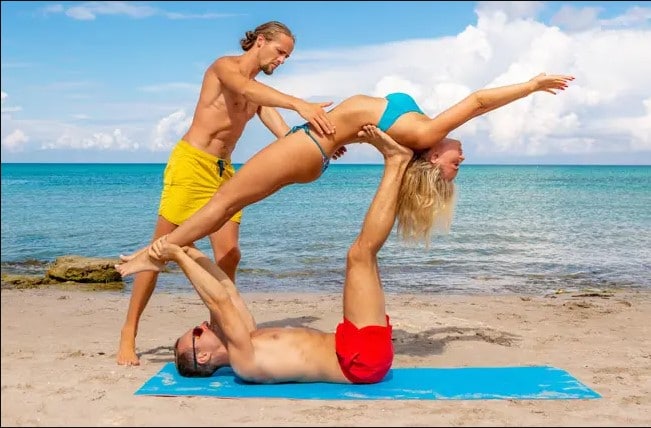
The base lies on their back with legs extended upward. The middle person drapes backward over the base's feet in a supported backbend. The third person assists the middle's balance by holding their hands or shoulders. This opens the chest and spine deeply for the middle person while building leg strength in the base.
Throne Pose for Three
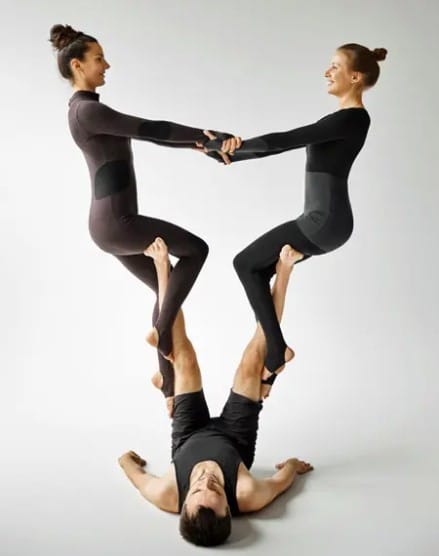
Two bases lie side by side and press the flyer up on their feet into a seated "throne" position. The flyer sits tall with arms extended or in a mudra. This looks impressive and photographs well, making it a crowd favorite at yoga retreats. The key is synchronized leg pressing between both bases.
Warning: Never attempt throne pose without warming up your hip flexors. Cold hip muscles make the base's leg positioning unstable and put the flyer at risk of falling.
Lord of the Dance Group Flow
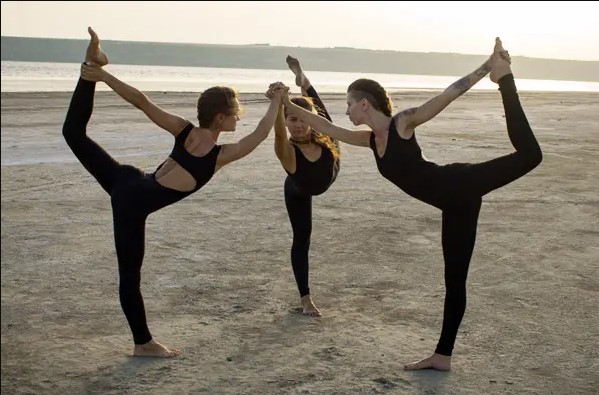
All three people stand and perform Lord of the Dance (Natarajasana) simultaneously, holding each other's free hands for balance. This synchronized standing pose develops balance and concentration. You each become a support system for the others. It's a beautiful demonstration of how yoga poses for three people blend individual skill with group synergy.
Challenging Poses That Push Your Trio
These poses demand significant upper body strength, deep trust, and practiced timing. Do not rush into these — your trio needs months of foundation work.
Double Plank Press
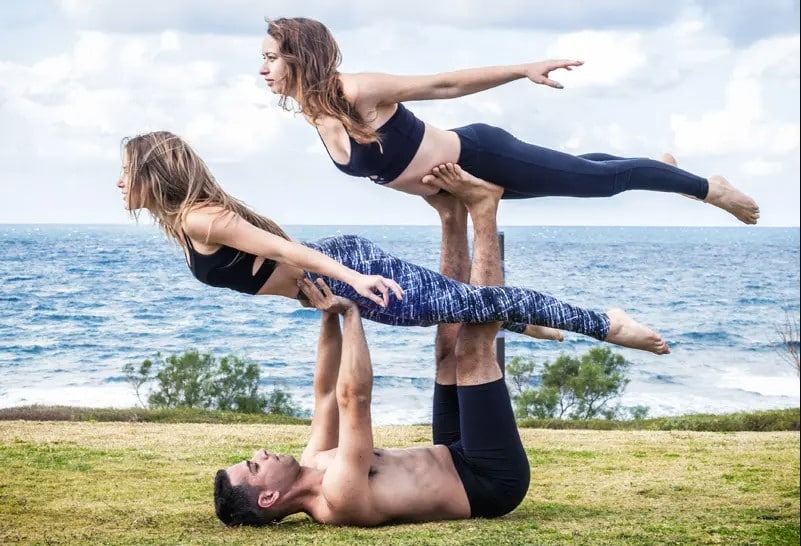
The base lies down and presses the middle person into a plank on their feet. The third person then planks on top of the middle person. This stacks roughly 250+ pounds on the base's legs. The base needs exceptional hamstring and quad strength. The top two must maintain rigid plank form — any sagging transfers dangerous load to the base's lower back.
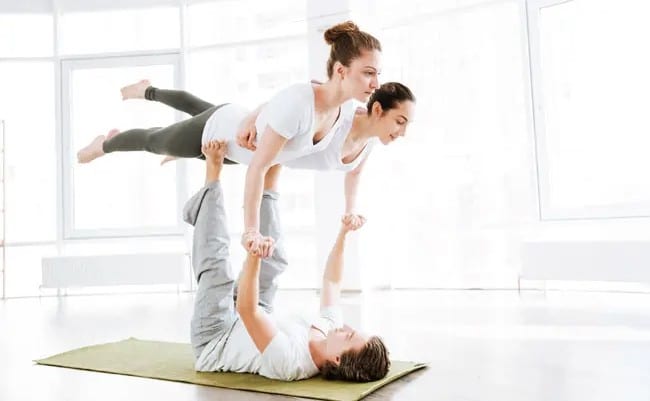
A double front plank variation shifts the weight distribution forward. The top person's hands rest on the middle person's shoulders rather than their lower back. This version tests shoulder stability more than the standard double plank.
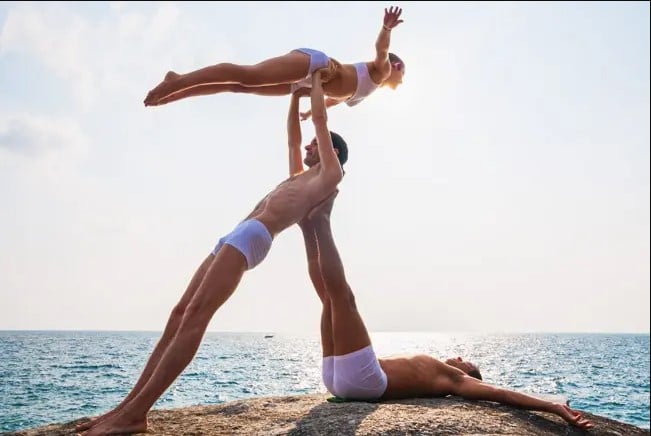
The flying plank press adds flight to the equation. Both the middle and top person are fully airborne, supported entirely by the base. This is an advanced showcase of what three-person acroyoga can achieve.
Flying Handstand
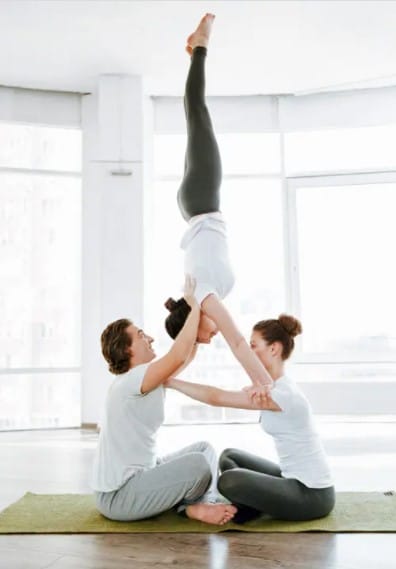
The base supports the middle person in flight. The middle person then supports the flyer in a handstand position overhead. This creates a vertical tower that requires extreme control. If your handstand isn't rock-solid on the ground, you're not ready for this one.
Front Plank with Vertical Flyer
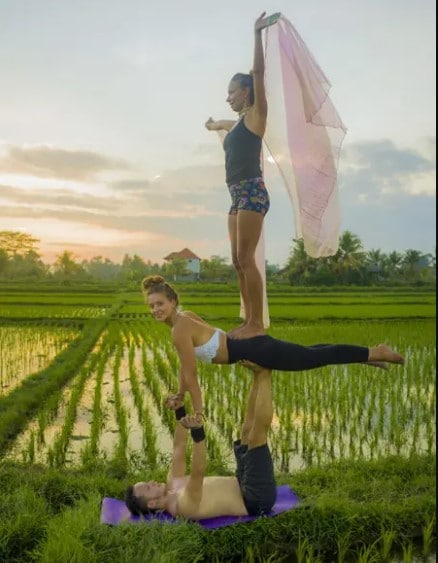
The base supports one person in a horizontal front plank while the third person stands vertically on the base's hands or the middle person's back. This combines horizontal and vertical balancing in a single formation. It's one of the most visually striking yoga poses for three people you can attempt.
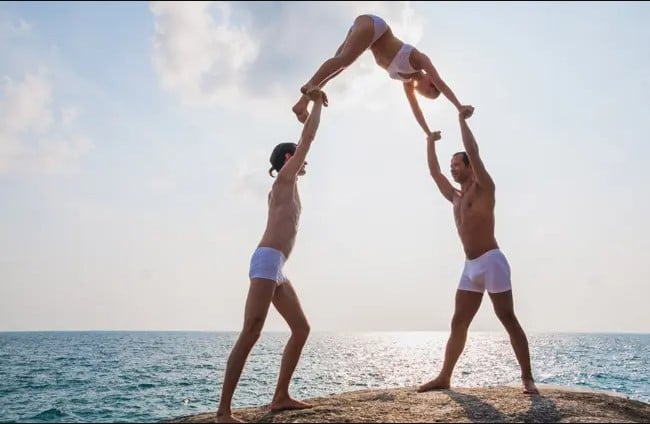
The flying downward dog takes the classic pose airborne. The base supports the middle person, who holds downward dog in the air while the third person adds a stacked element. Your shoulder engagement here is intense — this is not a resting pose.
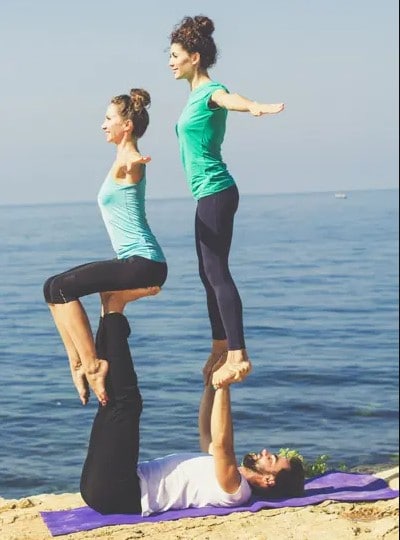
The foot-to-hand and throne combo merges two poses. One base supports a throne flyer while the other transitions into a foot-to-hand press. This requires all three people to adjust balance simultaneously — the definition of advanced teamwork.
Gear and Setup for Safe Three-Person Yoga
You don't need much equipment, but what you use matters. Three people generate more force and more sweat than a solo session. Your gear needs to handle that.
Mats and Surfaces
Use a thick, non-slip mat — at least 6mm. A quality mat for hard floors prevents bruising during base positions. For outdoor sessions, consider yoga mat alternatives like padded grass or gymnastics mats. You need enough surface area for all three people to move freely.
What to Wear
Wear fitted, non-slippery clothing. Loose fabric bunches under someone's hands or feet and causes slips. Good yoga shorts work well for bases. Flyers benefit from supportive yoga tops that stay in place when inverted. Avoid anything with zippers or hard embellishments — they dig into skin during contact points.
Mistakes That Sabotage Your Trio Practice
Three-person acroyoga has a steeper learning curve than partner yoga. These are the errors that slow your progress or lead to injury.
Skipping the warm-up. Your shoulders, wrists, hips, and hamstrings all bear unusual loads in trio poses. Ten minutes of dynamic stretching is non-negotiable. Cold muscles fail under the weight of another person.
Choosing partners by friendship, not ability. Your best friend might not be the right base. Match roles to body type and strength honestly. Ego has no place in acroyoga.
Rushing progression. Jumping from the down dog pyramid to a flying handstand in one session is reckless. Spend at least three to four sessions mastering each difficulty level before moving up.
Tip: Film your practice sessions from the side. You'll catch alignment issues that you can't feel from inside the pose. Review footage between attempts.
Neglecting the dismount. Getting into a pose is half the skill. Getting out safely is the other half. Practice controlled exits for every pose before you hold it at full extension.
Three-Person Pose Difficulty at a Glance
Use this table to plan your sessions. Match each pose to your group's current ability level.
| Pose | Difficulty | Key Muscle Groups | Min. Experience |
|---|---|---|---|
| Down Dog Pyramid | Easy | Shoulders, wrists, hamstrings | Beginner |
| 3-Person Plank | Easy | Core, shoulders, arms | Beginner |
| Downward Dog L-Shape | Easy | Shoulders, hips, core | Beginner |
| Whale Pose Variation | Intermediate | Legs (base), spine (middle) | 3+ months |
| Throne Pose for Three | Intermediate | Quads, hip flexors, core | 3+ months |
| Lord of the Dance | Intermediate | Balance, hip flexors, quads | 3+ months |
| Double Plank Press | Challenging | Full body, especially legs | 6+ months |
| Flying Handstand | Challenging | Shoulders, core, wrists | 1+ year |
| Front Plank + Vertical Flyer | Challenging | Shoulders, core, balance | 1+ year |
Notice the jump in experience requirements between intermediate and challenging. That gap exists for a reason — the forces involved in stacked flight poses are dramatically higher. Respect the progression.
Frequently Asked Questions
Do all three people need to be the same size for three-person yoga?
No. In fact, size differences help. The heaviest, strongest person should base. The lightest person should fly. The middle person bridges the two. Different body types create natural advantages for each role. Focus on matching strength to role, not on matching each other.
How often should you practice yoga poses for three people?
Two to three sessions per week gives your trio enough repetition to build muscle memory without overtraining. Each session should last 45–60 minutes including warm-up and cool-down. Your wrists and shoulders need recovery time between sessions, especially when you're learning new poses.
Can beginners try three-person acroyoga safely?
Yes, if you start with the easy poses and follow proper progressions. Each person should have a basic individual yoga practice before attempting group work. You need baseline core strength, body awareness, and the ability to hold a plank for at least 30 seconds. Start with the down dog pyramid and build from there.
Next Steps
- Find your trio. Identify two practice partners with compatible schedules and similar commitment levels. Discuss each person's strengths and assign base, middle, and flyer roles based on body type and experience.
- Master the easy three first. Spend your first three sessions on the down dog pyramid, 3-person plank, and downward dog L-shape. Don't move on until all three people feel stable and confident in each pose.
- Set a weekly practice schedule. Block out two sessions per week, 45–60 minutes each. Consistency matters more than session length — your muscle memory and trust build through repetition, not marathon sessions.
- Film and review. Record at least one attempt per pose from a side angle. Watch the footage together and identify alignment corrections before your next session.


About Susan T.
Susan T. is an internationally recognized yoga teacher who has spent years leading teacher trainings, workshops, and retreats around the world. Her work has been featured in Yoga Journal, Mantra Yoga, and the San Jose Mercury News, and she brings the same accessible, grounded approach to her writing that she brings to the mat — focused on what yoga actually does for real bodies and real lives rather than what it looks like in a photoshoot. At the site, she covers yoga tips and technique guides, gear and accessory reviews, and resources for practitioners at every stage of their practice.