11 Best Yoga Mats Under $50 In 2026
by Susan T.
Over 36 million Americans practiced yoga at least once in 2025, and the global yoga mat market crossed $14 billion that same year. Yet here's the thing most beginners don't realize: you don't need to spend $100 or more to get a mat that performs well. The sub-$50 price bracket has exploded with solid options from brands investing in better foam densities, eco-friendly TPE materials, and genuinely useful extras like carrying straps and alignment guides.
Whether you're rolling out your first Downward Dog or you need a dedicated mat for home floor workouts, the affordable range now covers everything from ultra-thick 1-inch cushioning monsters to lightweight 6mm travel-friendly options. The trick is matching the right mat to your practice style — a hot yoga devotee has completely different grip needs than someone doing gentle stretching on hardwood floors. If you're still exploring surfaces, our guide to yoga mat alternatives covers some creative options beyond traditional mats.

We tested and compared seven of the most popular budget yoga mats available in 2026, evaluating them across thickness, grip, material safety, portability, and overall durability. Below you'll find detailed reviews, a side-by-side comparison table, and a buying guide to help you zero in on the right mat without overspending.
Our Top Picks for 2026
- #PreviewProductRating
- Bestseller No. 1
 Rating:

- Bestseller No. 2
 Rating:
 - Bestseller No. 3
 Rating:
 - Bestseller No. 4
 Rating:
 - Bestseller No. 5
 Rating:
 - Bestseller No. 6
 Rating:
 - Bestseller No. 7
 Rating:

Detailed Product Reviews
1. Gaiam Essentials Thick Yoga Mat — Best for Beginners on a Budget
The Gaiam Essentials has been a gateway mat for yoga newcomers for years, and the 2026 version continues that tradition without any major changes — which, honestly, is fine because the formula works. At 10mm (roughly 2/5 inch) of high-density NBR foam, it sits in a comfortable middle ground: thick enough to protect your knees during lunges and tabletop poses, but not so thick that you feel disconnected from the floor during standing balances. The textured foam surface provides reasonable traction on hard floors during dry workouts, though you'll notice slippage once your palms start sweating in a vigorous flow session.
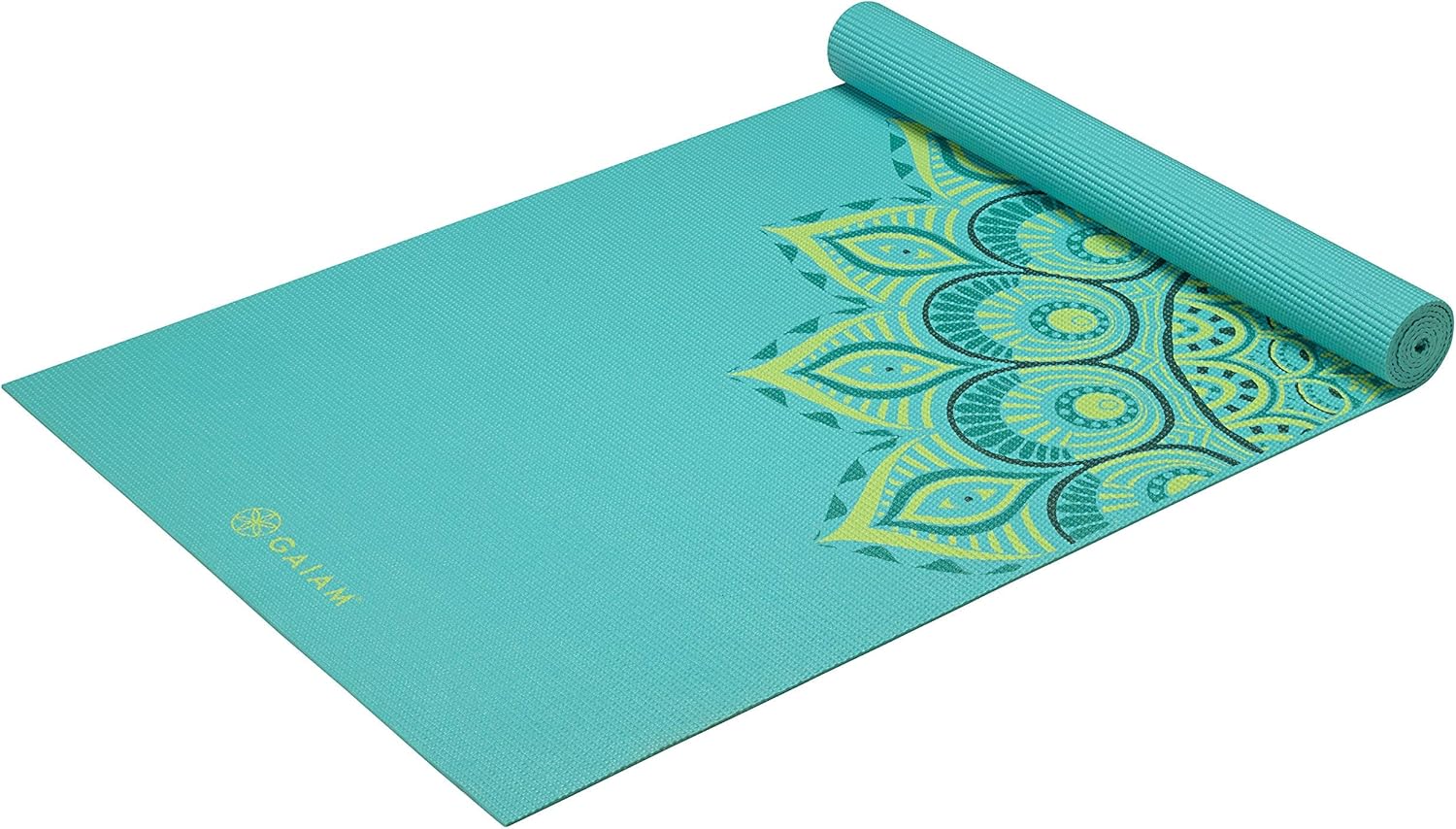
What makes this mat particularly appealing for first-timers is the included easy-cinch carrier strap. It's a small addition, but having a strap bundled in means you can carry this mat to class on day one without buying accessories separately. The teal colorway looks fresh, and the mat is available in multiple colors if you prefer something different. At 72 inches long and 24 inches wide, it accommodates most body types comfortably.
The one caveat with NBR foam is the initial odor. Gaiam acknowledges this directly — expect a chemical smell when you first unroll it. Airing it out for 24 to 48 hours typically resolves the issue, but if you're sensitive to smells, plan ahead before your first session. Maintenance is straightforward: a damp cloth wipe-down after practice keeps it clean. This mat excels for low-impact yoga, Pilates, stretching, and general floor exercises. It's not the mat for hot yoga or advanced vinyasa where grip under moisture is critical, but for the price, it's remarkably hard to beat as a starting point.
Pros:
- Excellent cushioning at 10mm thickness protects joints on hard surfaces
- Includes an easy-cinch carrier strap right out of the box
- Low price point makes it accessible for absolute beginners
- Multiple color options available
Cons:
- Noticeable chemical odor when new that needs 24-48 hours to dissipate
- Grip diminishes significantly with moisture or sweat

2. Amazon Basics Extra Thick Exercise Yoga Mat — Best No-Frills Value
Amazon's in-house brand has a knack for stripping products down to essentials and pricing them aggressively, and this yoga mat follows that playbook precisely. At half an inch thick, it delivers cushioned support that absorbs impact well during floor exercises, kneeling poses, and stretching routines. The foam construction is durable enough to spring back into shape after being rolled tightly, which is reassuring if you're storing it in a gym bag or closet between sessions. At 74 inches long — two inches longer than most competitors on this list — taller practitioners finally get some extra real estate.
The textured surface adds traction, and the included carrying strap makes transport convenient. In terms of raw performance, this mat doesn't try to differentiate itself through eco-credentials or fancy alignment systems. It's simply a well-built, thick exercise mat at a rock-bottom price. The black colorway is practical — it hides dirt and wear well over time. You'll find this mat handles gym workouts, home stretching, and casual yoga equally well.
Where it falls short is in the details that dedicated yoga brands tend to nail. The texture, while functional, isn't as refined as what you'll find on TPE mats from Gaiam or Heathyoga. And the foam, while cushy, can feel slightly unstable during balancing poses because of the thickness. If your practice is primarily floor-based — think ab work, stretching, physical therapy exercises — this is one of the strongest values available. For dedicated yoga practitioners who prioritize ground feel and stability, you may want to look at thinner options.
Pros:
- Half-inch thickness provides generous cushioning for floor exercises
- 74-inch length accommodates taller users
- Foam springs back into shape reliably after storage
- Extremely competitive pricing with carrying strap included
Cons:
- Thickness can feel unstable during standing balance poses
- Surface texture is basic compared to dedicated yoga mat brands
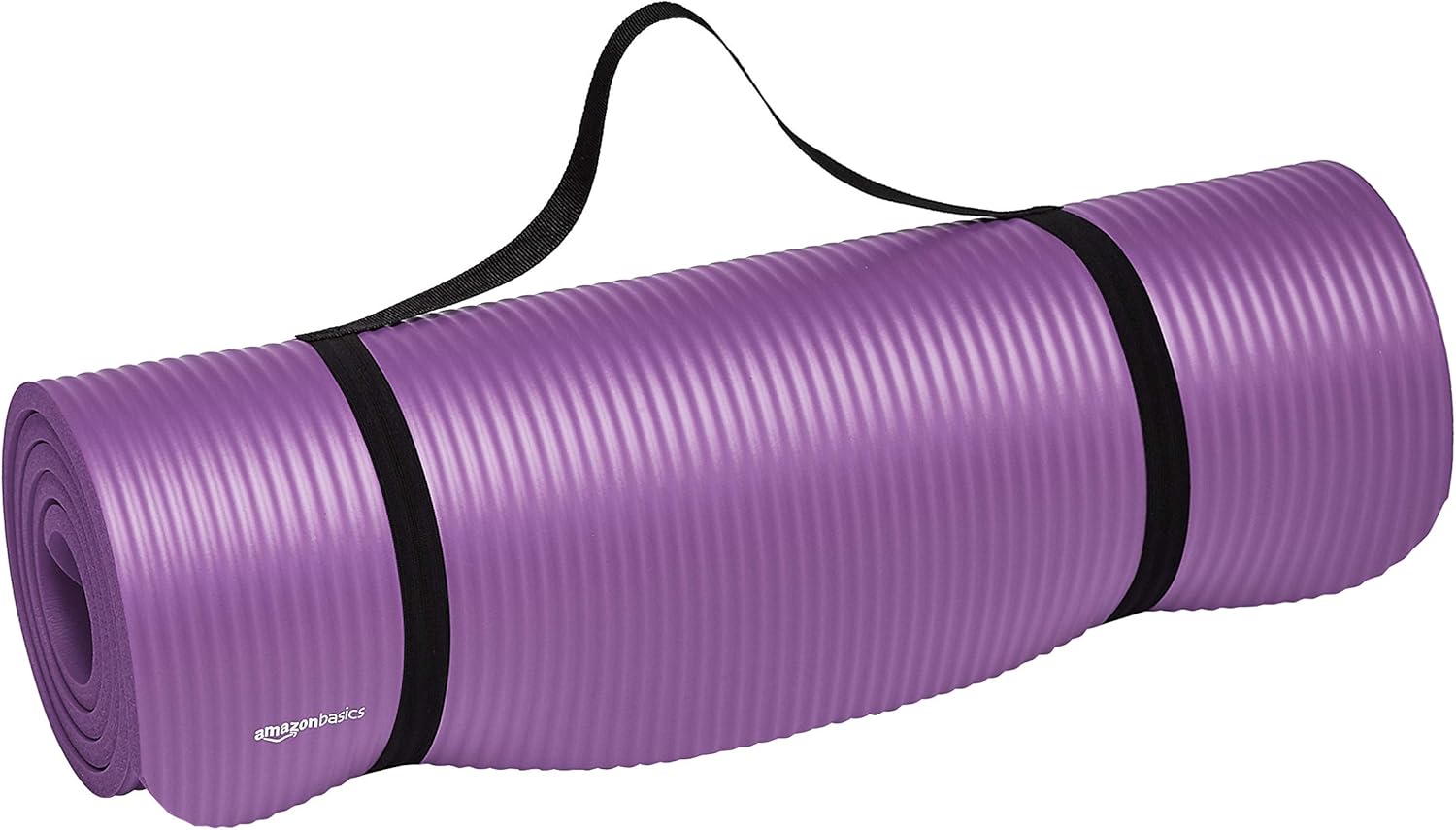
3. BalanceFrom All-Purpose Extra Thick Yoga Mat — Best Ultra-Thick Cushioning
If joint protection is your number one priority, the BalanceFrom mat delivers it in abundance. At a full inch thick, this is one of the most generously cushioned mats you'll find under $50. That extra padding makes a real difference when you're doing exercises that load your knees, elbows, hips, or spine against hard floors. People recovering from injuries, dealing with arthritis, or simply practicing on concrete or tile will appreciate how much impact this mat absorbs. The high-density foam strikes a balance between softness and support — it compresses under weight but doesn't bottom out completely.
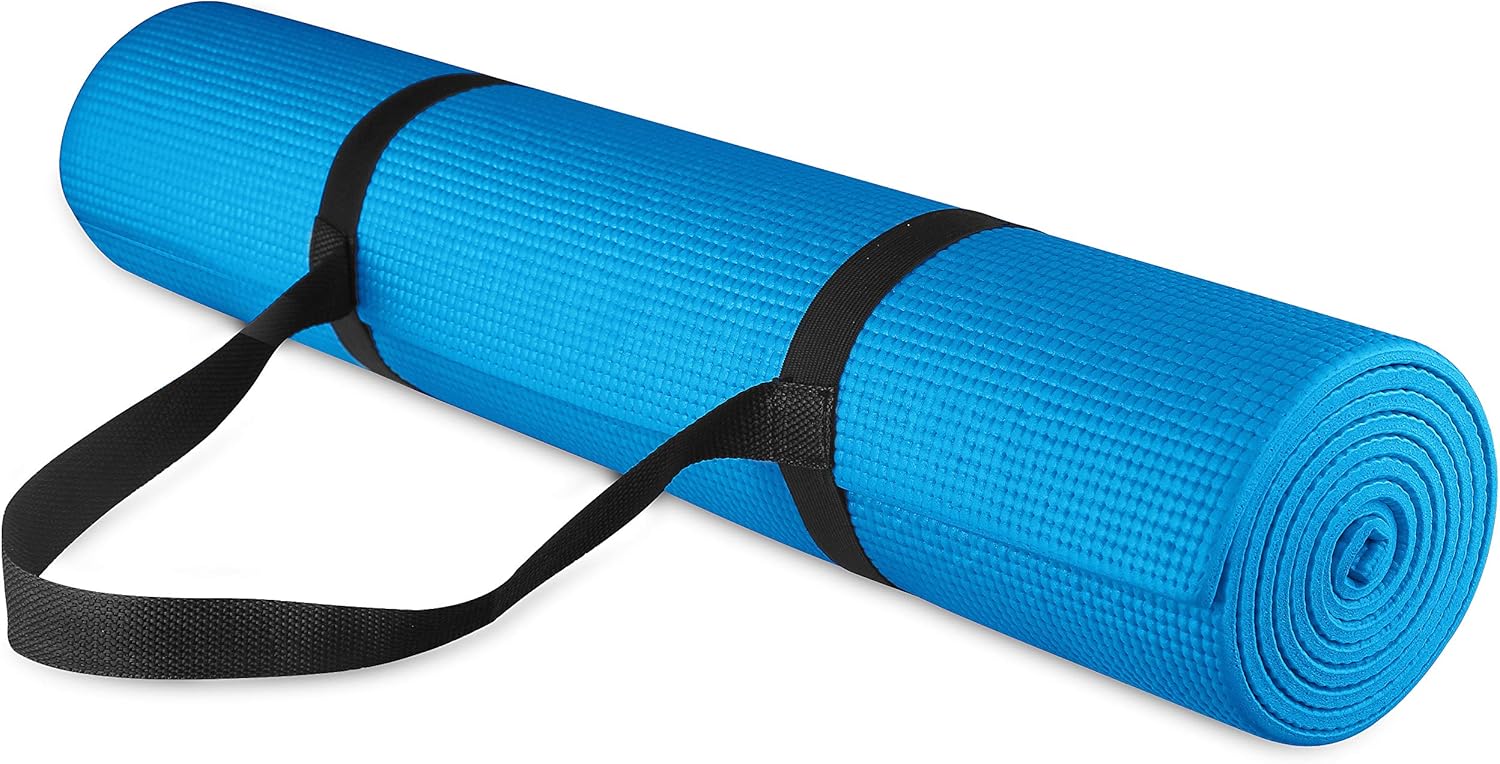
The double-sided textured surface is a smart design choice. Both sides grip, which means the mat stays put on the floor while your hands and feet stay put on the mat. The moisture-resistant technology is genuinely useful — sweat and dirt sit on the surface rather than absorbing into the foam, and a quick soap-and-water wipe restores it to clean condition. The included carrying strap rounds out a solid package. At 71 by 24 inches, the dimensions are standard.
The trade-off with one-inch thickness is always the same: stability. You will feel a wobble during standing poses like Warrior III or Tree Pose. Your feet sink slightly into the foam, which disrupts the proprioceptive feedback your body needs for balance. This mat truly shines for Pilates, floor-based strength training, physical therapy, and restorative yoga where you spend most of your time seated or lying down. If your practice involves significant standing work, consider one of the thinner mats on this list instead. The purple colorway is vibrant, and the anti-tear construction suggests reasonable longevity even with daily use.
Pros:
- Full 1-inch thickness provides maximum joint protection on hard floors
- Double-sided non-slip texture prevents shifting during exercises
- Moisture-resistant surface wipes clean easily after sweaty sessions
- High-density foam resists bottoming out under body weight
Cons:
- Too thick for stable standing balance poses — noticeable wobble
- Bulkier to roll and transport than thinner mats
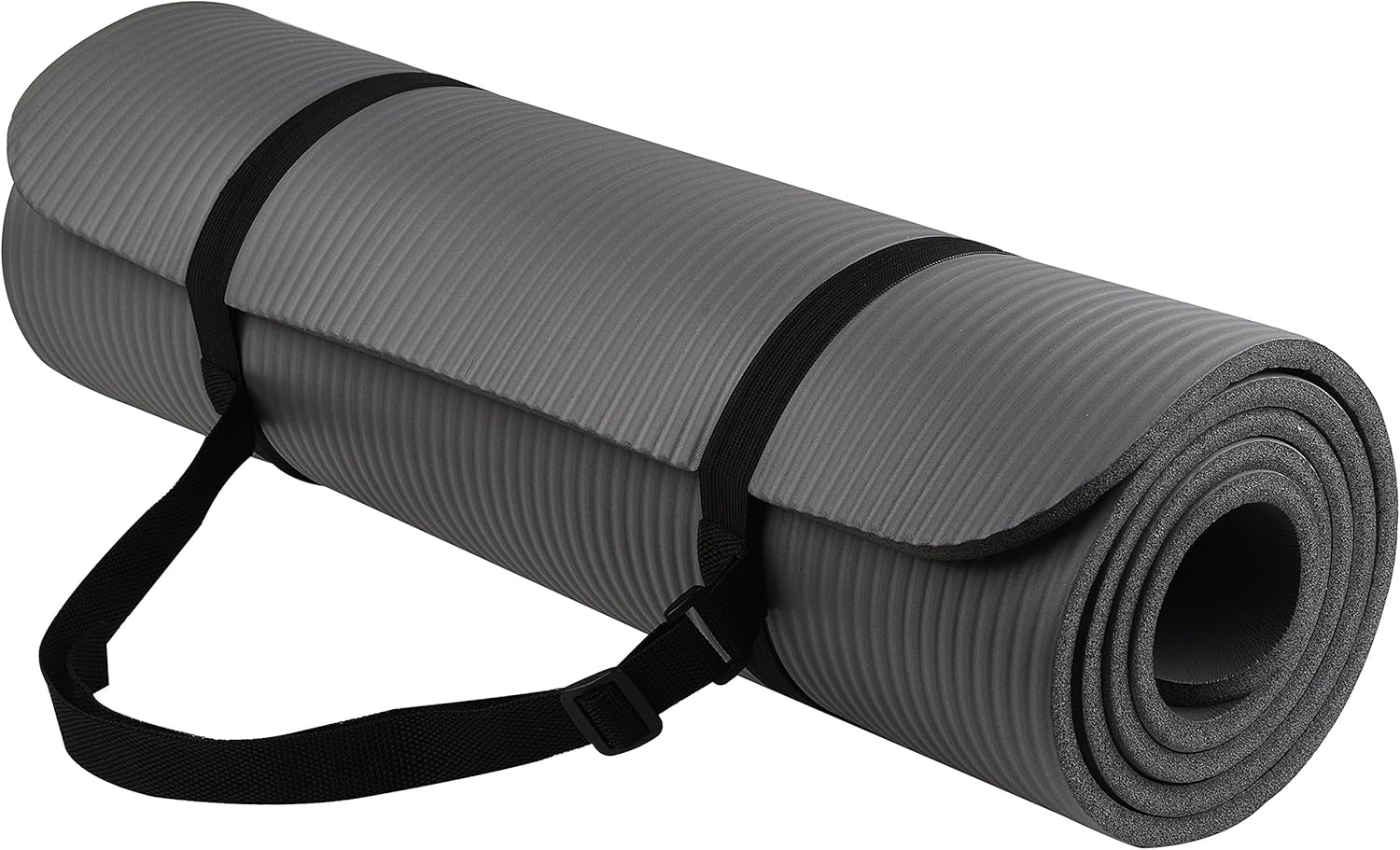
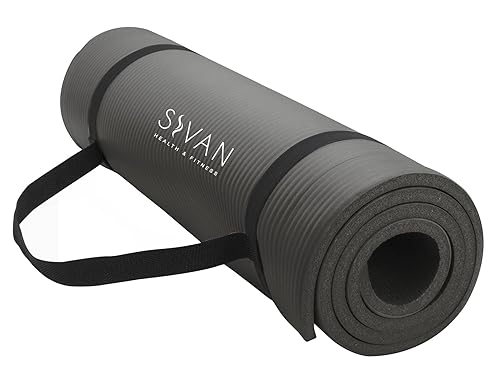
4. ProsourceFit Extra Thick Yoga and Pilates Mat — Best for Pilates and Floor Work
ProsourceFit positions this mat squarely at the Pilates and floor exercise crowd, and the specifications back that up. The 1-inch (25mm) high-density foam version delivers the kind of serious cushioning that Pilates practitioners need for rolling exercises, spine articulation work, and any movement where your vertebrae press into the floor. The foam density here feels noticeably firmer than the BalanceFrom, which some users prefer because it offers more supportive feedback rather than a plush, sinking feeling.
At 71 by 24 inches, the mat accommodates full-body exercises without your head or feet hanging off the edge. The NBR foam is naturally water-resistant, so wiping it down with a wet cloth or sponge after a workout is all the maintenance required. Let it air dry and it's ready for the next session. The grey colorway is neutral and professional-looking, suitable for both home gyms and studio settings. ProsourceFit also offers a half-inch (13mm) version if you want the same construction with less bulk.
The carrying strap included is functional, though not premium. It gets the job done for trips between your car and the studio. Like all ultra-thick mats, this one is not ideal for standing yoga poses where ground connection matters. But for its intended purpose — Pilates, floor exercises, rehabilitation work, and stretching — the ProsourceFit delivers excellent value. The foam holds up well over months of regular use without developing permanent compression spots, which is a common failure point in cheaper thick mats.
Pros:
- Firm high-density foam provides supportive cushioning without excessive softness
- Available in both 1-inch and half-inch thickness options
- Water-resistant NBR foam simplifies cleaning and maintenance
- 71-inch length fits most body types for full-body floor work
Cons:
- Too thick and soft for standing yoga poses requiring balance
- Carrying strap is basic quality
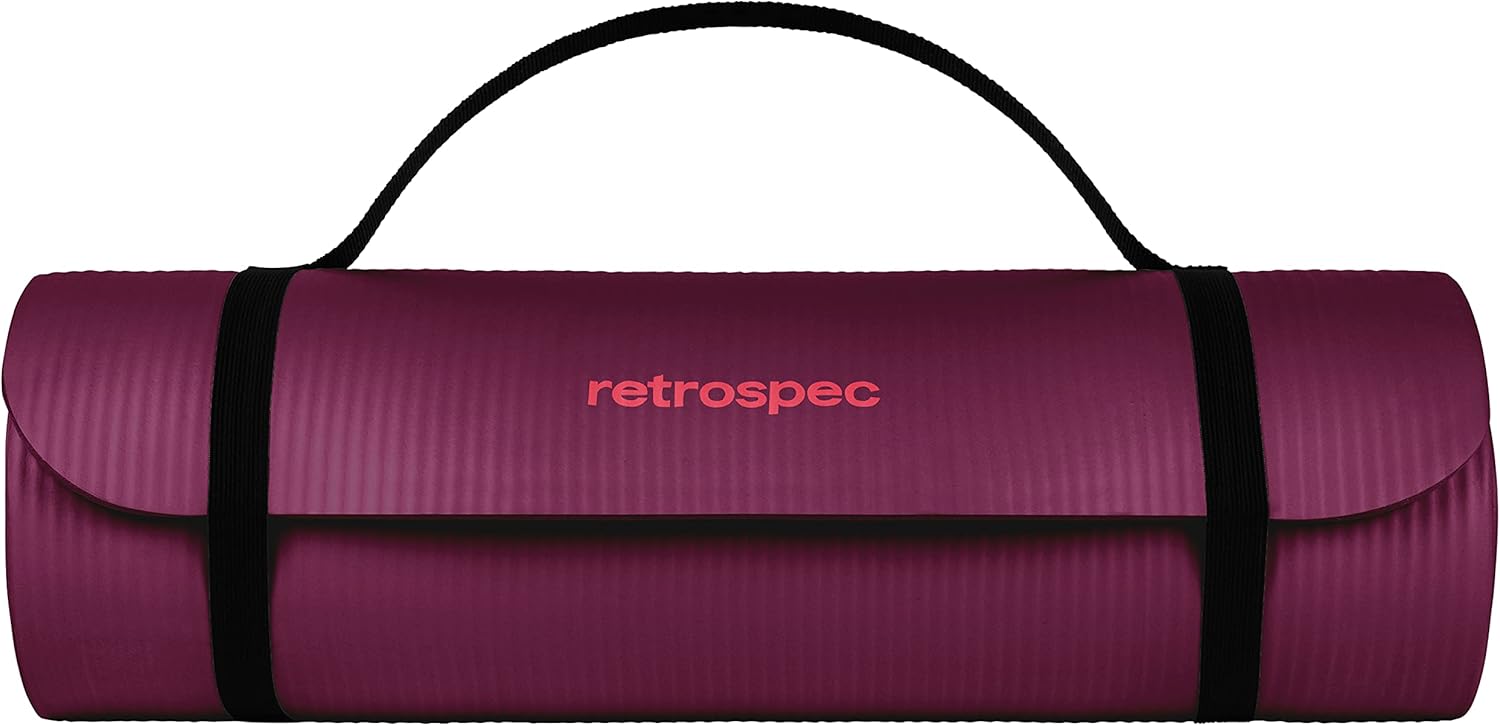
5. Retrospec Solana Yoga Mat — Best for Joint Pain Relief
Retrospec's Solana is another entry in the 1-inch thick mat category, but it distinguishes itself with a focus on firm cushioning rather than plush softness. The mat's density is calibrated to alleviate stress on pressure points — joints, hips, hands, and knees — without creating the "standing on a mattress" sensation that plagues some ultra-thick competitors. This firmness makes it marginally better for stability during transitional movements, though it still won't match a 6mm mat for standing balance work.
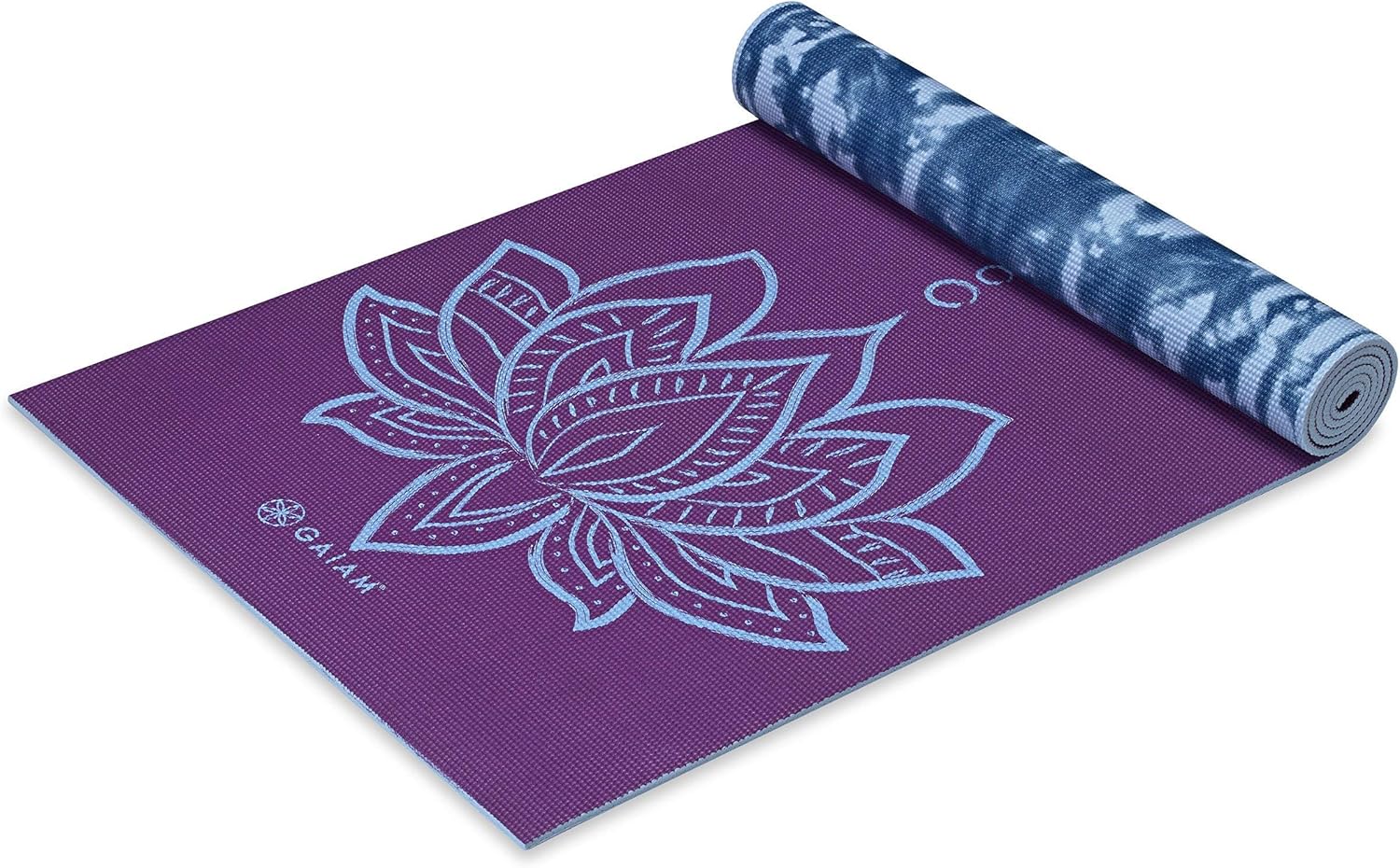
The non-slip material works on both sides, keeping the mat anchored to your floor while providing grip for your hands and feet on top. Retrospec emphasizes durability, and the thick material does hold up well to everyday use regardless of exercise intensity. The Ocean Blue color is attractive, and several other colorways are available. The included nylon carrying strap is a step up from the basic elastic straps some competitors bundle — it feels more secure during transport.
Where the Solana really earns its keep is in mixed-use scenarios. If you alternate between yoga, bodyweight fitness, and stretching throughout the week, this mat handles all three without complaint. The foam rebounds cleanly after exercises, maintaining its shape over time. At 72 by 24 by 1 inch, the footprint is standard. One thing worth noting: like most thick foam mats, this one takes up more space when rolled than a standard yoga mat. If storage is tight, measure your bag or shelf before committing. For practitioners who deal with chronic joint discomfort and need that extra layer of protection between themselves and the floor, the Solana is a strong contender in the 2026 budget mat landscape.
Pros:
- Firm 1-inch cushioning relieves pressure on sensitive joints effectively
- Dual-sided non-slip material keeps both you and the mat stable
- Durable construction handles varied exercise intensities well
- Nylon carrying strap feels more secure than elastic alternatives
Cons:
- Still too thick for dedicated standing yoga practices
- Rolls up bulkier than standard mats, requiring more storage space
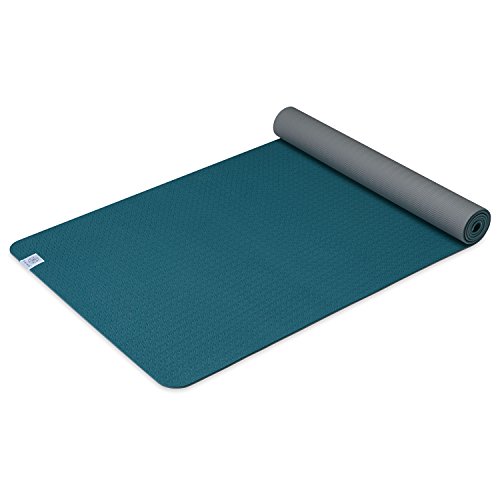
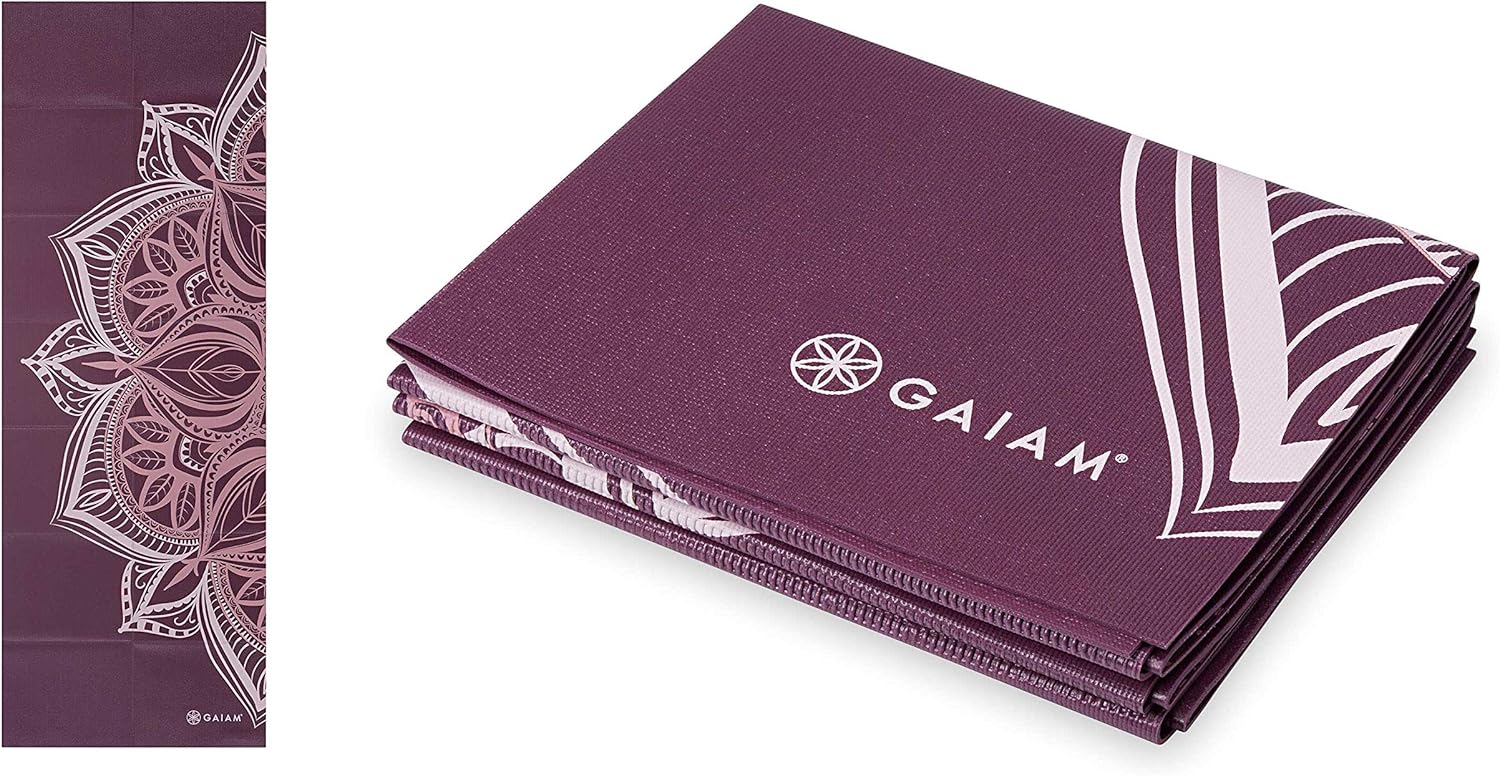
6. Gaiam Yoga Mat Performance TPE — Best Eco-Friendly Option
Gaiam's Performance TPE mat represents a significant step up in material quality from the NBR foam mats that dominate the budget category. Thermoplastic elastomer (TPE) is a newer material in the yoga mat world, and it brings several advantages: it's lighter than traditional PVC, free from latex and harmful chemicals, and more environmentally responsible at end of life. At 6mm thick, this mat sits in the sweet spot for actual yoga practice — enough cushioning to protect your knees during Low Lunge, but thin enough to maintain solid ground connection during standing poses like Warrior II and Half Moon.

The closed-cell design is one of the standout features here. Unlike open-cell mats that absorb sweat and moisture (eventually leading to odor and bacterial growth), this mat seals everything out. Your sweat sits on the surface where you can wipe it away. This makes it considerably more hygienic over the long term than porous NBR or PVC mats, and it means the mat won't develop that musty gym smell after months of use. The no-slip surface provides reliable traction for dry practices.
The Lake colorway has a calm, muted aesthetic that looks good in any studio or home setting. If you've been practicing on hardwood floors, this mat pairs particularly well with smooth surfaces — check our best yoga mats for hardwood floors guide for more specialized options. The main limitation is that 6mm of TPE won't satisfy anyone looking for plush, thick cushioning for floor exercises. This is a yoga-first mat, designed for practitioners who value ground feel, grip, and material quality over maximum padding. If that describes your practice, the Gaiam Performance TPE is arguably the best pure yoga mat on this list.
Pros:
- TPE material is eco-friendlier, lighter, and free from PVC, latex, and heavy metals
- Closed-cell design locks out sweat and odor for better long-term hygiene
- 6mm thickness offers ideal balance of cushion and ground connection for yoga
- No-slip surface performs well during dry practice sessions
Cons:
- Not thick enough for users who need heavy joint cushioning on hard floors
- Grip can still diminish during very sweaty sessions despite closed-cell design
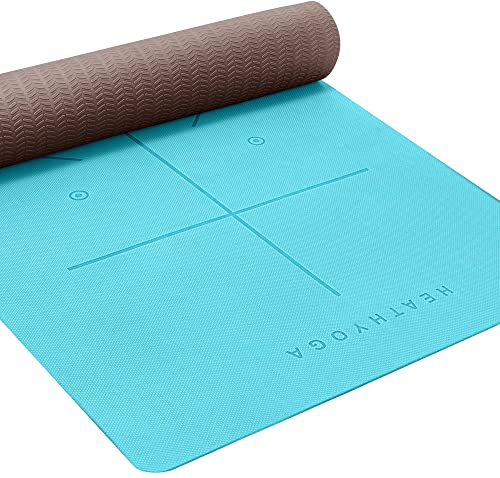
7. Heathyoga Eco Friendly Non Slip Yoga Mat — Best for Alignment and Form
The Heathyoga mat's most distinctive feature is immediately visible: a body alignment system etched directly into the surface. These laser-engraved guide lines help you position your hands and feet correctly during poses, which is invaluable for solo practitioners who don't have an instructor adjusting their form in real time. If you've ever wondered whether your Warrior I stance is wide enough or your hands are truly shoulder-width apart in Plank, the alignment lines give you instant visual feedback without breaking your flow to look in a mirror.
Material-wise, this is an SGS-certified TPE mat — no PVC, no latex, no heavy metals. The 6mm thickness with a double-layer structure provides optimal grip on both sides and decent cushioning for a yoga-first mat. Heathyoga's TPE feels slightly different from Gaiam's; there's a textured pattern on both surfaces that enhances grip during practice. At 72 by 26 inches, it's two inches wider than most competitors, giving you a bit more room for wide-stance poses and lateral movements. That extra width might sound minor, but you'll notice it during poses like Extended Side Angle or when you're doing Sun Salutations and your hands sometimes slip off the edge of narrower mats.

The dual-layer non-slip texture works well for dry to moderate-sweat practices. In genuinely hot or humid conditions, you'll still want a towel overlay, but that's true of nearly every mat in this price range. The TPE material is odorless out of the box — a refreshing change from the NBR foam mats earlier on this list that require days of off-gassing. For practitioners who are serious about improving their form and want a mat that actively helps them do so, the Heathyoga is the most feature-rich option under $50 in 2026. It's particularly well-suited for home practitioners following along with video classes where there's no teacher to correct misalignment.
Pros:
- Body alignment guide lines help solo practitioners maintain proper form
- SGS-certified TPE material is eco-friendly and odorless out of the box
- 26-inch width provides extra room for wide-stance poses
- Double-sided non-slip texture offers reliable grip on both surfaces
Cons:
- Alignment lines may feel visually busy if you prefer a clean mat surface
- 6mm thickness may not provide enough cushioning for users with sensitive joints
Buying Guide: How to Choose the Best Yoga Mat Under $50
Thickness: Finding Your Sweet Spot
Thickness is the single most important decision you'll make when choosing a budget yoga mat, and there's no universally correct answer — it depends entirely on what you'll be doing on it. The mats on this list range from 6mm to a full inch (25mm), and that range covers vastly different use cases. For traditional yoga practice, 6mm hits the optimal balance between joint protection and ground connection. You can feel the floor beneath you during standing poses, which is essential for balance and proprioceptive awareness, while still having enough padding to keep your knees comfortable during kneeling positions.
If your primary activities are floor-based — Pilates, stretching, physical therapy, bodyweight exercises — then thicker is generally better. The 1-inch mats from BalanceFrom, ProsourceFit, and Retrospec excel here because they create a substantial buffer between your body and hard surfaces. Just understand the trade-off: every millimeter of extra cushioning reduces your stability during standing work. There's no mat that maximizes both cushioning and stability simultaneously. Decide which matters more to your practice and choose accordingly.
Material: NBR Foam vs. TPE
You'll encounter two primary materials in the sub-$50 range: NBR (Nitrile Butadiene Rubber) foam and TPE (Thermoplastic Elastomer). NBR foam is the more common material in thick, affordable mats. It's soft, cushy, and provides excellent shock absorption. The downsides are a chemical odor when new, open-cell structure that can absorb moisture over time, and heavier weight. NBR mats are ideal for cushioning-first use cases.
TPE is the newer, more premium material — and it shows. TPE mats are lighter, typically odorless, free from PVC and latex, and feature closed-cell construction that resists moisture absorption. They're more environmentally responsible and tend to feel more refined underfoot. The trade-off is that TPE mats in this price range are thinner (typically 6mm), so they don't offer the same level of cushioning as thick NBR mats. If you value material quality, hygiene, and eco-consciousness, TPE is worth the slight cushioning compromise. For those interested in natural mat materials, our guide to cork yoga mats covers another eco-friendly alternative.
Grip and Surface Texture
Grip matters more than most beginners realize. A mat that slides during Downward Dog isn't just annoying — it's a safety issue that forces you to use muscular effort to stabilize instead of relaxing into poses. Every mat on this list offers textured surfaces for traction, but performance under moisture varies dramatically. NBR foam mats generally grip well when dry but lose traction quickly once you start sweating. TPE mats with dual-sided texturing tend to maintain grip better under moderate moisture, though no budget mat truly excels in hot yoga conditions.
If you sweat heavily or practice in warm environments, consider layering a yoga towel over your mat. This is a practical solution regardless of price point — even premium $100+ mats benefit from towels during intense sessions. For dry practices on hard floors, virtually any mat on this list provides adequate grip.
Size, Portability, and Extras
Standard yoga mat dimensions hover around 72 by 24 inches, and most mats on this list conform to that standard. Notable exceptions include the Amazon Basics at 74 inches long (better for tall users) and the Heathyoga at 26 inches wide (better for wide stances). If you're over 6 feet tall, pay close attention to length — there's nothing worse than your head hanging off the mat during Savasana.
Portability is directly tied to thickness and material density. A 6mm TPE mat rolls into a compact cylinder you can toss in a tote bag. A 1-inch NBR mat rolls into something closer to a sleeping bag in diameter. Nearly every mat on this list includes a carrying strap, which is a nice touch at this price point. If you're commuting to a studio regularly, factor in the rolled diameter and weight. For home-only use, portability matters less than performance. Consider the extra features too — Heathyoga's alignment lines, for instance, add genuine functional value if you practice solo.
FAQs
How thick should a yoga mat be for beginners?
For most beginners, a mat between 6mm and 10mm offers the best compromise between comfort and stability. If your joints are healthy and you're practicing traditional yoga, 6mm gives you enough cushioning while maintaining solid ground feel for balance poses. If you have sensitive knees or plan to do a lot of floor work, stepping up to 10mm or even a half-inch mat provides more padding without completely sacrificing stability. Avoid jumping straight to a 1-inch mat unless floor exercises are your primary focus — the excess thickness makes standing poses unnecessarily difficult for someone still developing balance.
Can I use a thick exercise mat for hot yoga?
Thick NBR foam mats are generally poor choices for hot yoga. The combination of heat and heavy sweating causes most budget mat surfaces to become dangerously slippery. If you practice hot yoga regularly, look for a closed-cell TPE mat like the Gaiam Performance or Heathyoga, and layer a microfiber yoga towel on top for maximum grip. The towel absorbs moisture while the closed-cell mat underneath resists water penetration, creating a much safer practice surface. Many dedicated hot yoga practitioners prefer thinner mats (3-4mm) for maximum floor connection, but those options are typically above the $50 price point.
How do I clean a yoga mat properly?
For NBR foam mats like the Gaiam Essentials, BalanceFrom, and ProsourceFit, wipe the surface with a damp cloth after each use and let it air dry fully before rolling. For deeper cleaning, use a mild soap and water solution weekly. TPE mats like the Gaiam Performance and Heathyoga can be cleaned the same way, but their closed-cell design means they require less frequent deep cleaning since sweat doesn't penetrate the surface. Never submerge any of these mats in water or put them in a washing machine. Avoid harsh chemicals, bleach, or abrasive cleaners — they can break down both NBR foam and TPE material over time.
What's the difference between NBR and TPE yoga mats?
NBR (Nitrile Butadiene Rubber) is a synthetic rubber foam that's soft, thick, and affordable. It provides excellent cushioning but absorbs moisture, can develop odors, and typically has a chemical smell when new. TPE (Thermoplastic Elastomer) is a newer material that's lighter, odorless, moisture-resistant, and free from PVC and latex. TPE mats tend to be thinner (around 6mm) and offer better grip and hygiene over time. The practical difference: NBR is better if maximum cushioning is your priority, while TPE is better if you value material quality, eco-friendliness, and long-term hygiene for dedicated yoga practice.
How long do budget yoga mats typically last?
With regular use (3-5 sessions per week), most budget yoga mats last between 12 and 24 months before they show significant wear. Signs it's time to replace your mat include visible thinning in high-use areas, loss of surface texture and grip, permanent compression that doesn't bounce back, and material flaking or tearing. TPE mats tend to maintain their surface texture slightly longer than NBR foam mats, but both degrade at roughly similar rates under heavy use. Proper care — wiping down after each session, storing rolled rather than folded, and keeping the mat out of direct sunlight — extends lifespan considerably.
Is a yoga mat worth it if I only do home workouts?
Absolutely. A yoga mat isn't just for yoga — it defines your workout space, protects your joints from hard floors, prevents slipping during exercises, and gives you a clean, dedicated surface for floor work. Even if you're doing bodyweight fitness, stretching, or following along with workout videos at home, a mat makes the experience safer and more comfortable. At the sub-$50 price point, it's one of the most cost-effective fitness investments you can make. The mats on this list are built to handle everything from gentle stretching to high-intensity floor circuits, making them versatile additions to any home gym setup.
Buy on Walmart
- Gaiam Essentials Thick Yoga Mat Fitness & Exercise Mat With — Walmart Link
- Amazon Basics 1/2 Inch Extra Thick Exercise Yoga Mat with Ca — Walmart Link
- BalanceFrom All-Purpose 1-Inch Extra Thick High Density Anti — Walmart Link
- ProsourceFit Extra Thick Yoga and Pilates Mat ½” (13mm) or 1 — Walmart Link
- Retrospec Solana Yoga Mat 1" Thick w/Nylon Strap for Men & W — Walmart Link
- Gaiam Yoga Mat Performance TPE Exercise & Fitness Mat for Al — Walmart Link
- Heathyoga Eco Friendly Non Slip Yoga Mat, Body Alignment Sys — Walmart Link
Buy on eBay
- Gaiam Essentials Thick Yoga Mat Fitness & Exercise Mat With — eBay Link
- Amazon Basics 1/2 Inch Extra Thick Exercise Yoga Mat with Ca — eBay Link
- BalanceFrom All-Purpose 1-Inch Extra Thick High Density Anti — eBay Link
- ProsourceFit Extra Thick Yoga and Pilates Mat ½” (13mm) or 1 — eBay Link
- Retrospec Solana Yoga Mat 1" Thick w/Nylon Strap for Men & W — eBay Link
- Gaiam Yoga Mat Performance TPE Exercise & Fitness Mat for Al — eBay Link
- Heathyoga Eco Friendly Non Slip Yoga Mat, Body Alignment Sys — eBay Link
Match the thickness to your practice, not to the price tag — 6mm for yoga balance, 10mm+ for floor comfort, and you'll never overpay for padding you don't need.


About Susan T.
Susan T. is an internationally recognized yoga teacher who has spent years leading teacher trainings, workshops, and retreats around the world. Her work has been featured in Yoga Journal, Mantra Yoga, and the San Jose Mercury News, and she brings the same accessible, grounded approach to her writing that she brings to the mat — focused on what yoga actually does for real bodies and real lives rather than what it looks like in a photoshoot. At the site, she covers yoga tips and technique guides, gear and accessory reviews, and resources for practitioners at every stage of their practice.